Introduction
A vegetarian stir-fry is not just a meal; it's an opportunity to express your creativity in the kitchen. Packed with vibrant vegetables and bold flavors, this dish brings together a variety of textures that can delight even the most discerning palate. Whether you're cooking for yourself or entertaining guests, a stir-fry is a versatile choice that offers something for everyone.
The beauty of a vegetarian stir-fry lies in its adaptability. You can mix and match vegetables according to the season or whatever you have in your fridge. The key is to use fresh produce and a few essential sauces to create a harmonious blend of flavors that will keep you coming back for more.
Ingredients
- 2 cups broccoli florets
Broccoli adds a crunch and a wealth of nutrients, such as vitamins C and K. Its sturdy texture holds up well during cooking, making it a staple in any stir-fry. - 1 red bell pepper, sliced
Red bell peppers contribute sweetness and vibrant color to the dish. They are also rich in antioxidants and vitamins A and C, enhancing both the flavor and health benefits. - 1 cup snap peas
Snap peas offer a fresh, crisp bite and a touch of sweetness. They cook quickly, adding texture and bright green color to the mix without becoming mushy. - 1 medium carrot, julienned
Carrots bring natural sweetness and a bit of crunch to the stir-fry. Their bright orange color adds visual appeal and a healthy dose of beta-carotene. - 1 cup sliced mushrooms
Mushrooms provide an earthy umami flavor that rounds out the dish. They also contribute moisture and help to enhance the overall texture. - 3 cloves garlic, minced
Garlic enhances the flavor profile of the stir-fry, imparting a wonderful aroma as it cooks. It also offers health benefits, including anti-inflammatory properties. - 1 tablespoon ginger, minced
Ginger adds a warm and slightly spicy note that complements the vegetables beautifully. It also aids digestive health, making the dish as wholesome as it is delicious. - 3 tablespoons soy sauce
Soy sauce acts as the primary seasoning, providing depth of flavor and a savory umami punch that ties all the ingredients together. - 1 tablespoon sesame oil
Sesame oil adds a rich and nutty flavor to the stir-fry. It helps elevate the dish’s overall taste and gives it a distinct Asian flair. - 2 tablespoons vegetable oil for frying
Vegetable oil is used for sautéing the ingredients, allowing for high-temperature cooking without burning. It ensures that the vegetables are cooked evenly. - Sesame seeds for garnish
Sesame seeds add a lovely crunch and nutty flavor when sprinkled on top just before serving. They also provide a visually appealing finish.
Directions & Preparation
Step 1: Prepare all vegetables by washing and chopping them accordingly.
Gathering and preparing your ingredients beforehand is essential for a successful stir-fry. This ensures that everything is ready to be cooked quickly, as stir-frying involves high heat and requires your full attention. By having everything prepped, you'll be able to transition smoothly from one step to the next.
Step 2: Heat vegetable oil in a large wok or skillet over medium-high heat.
Heating the oil properly is crucial. It should shimmer but not smoke when ready. This allows for the vegetables to sear rather than steam, locking in their flavors and retaining their crispness. Ensuring the pan is hot enough before adding the garlic and ginger will also help them release their aromatic oils.
Step 3: Add minced garlic and ginger, sautéing for about 30 seconds.
Sautéing the garlic and ginger first infuses the oil with their flavors, creating a savory base for the dish. Watch for browning; you want them fragrant and golden, not burnt. This step sets the flavor foundation for the entire stir-fry, heightening the overall aroma.
Step 4: Incorporate the broccoli and carrots into the wok, stir-frying for 2–3 minutes.
Starting with heartier vegetables like broccoli and carrots ensures they cook to the right tenderness while maintaining their crunch. Stir constantly to avoid burning and promote even cooking. Their time in the pan is crucial for developing depth of flavor.
Step 5: Add the sliced bell pepper, snap peas, and mushrooms; continue to stir-fry for another 3–4 minutes.
Combining these vegetables adds layers of flavors and textures. The quick cooking time preserves their freshness and color, ensuring the stir-fry looks vibrant. Pay attention to the snap peas; they should be bright green yet crisp.
Step 6: Pour in soy sauce and sesame oil, stirring well to coat the vegetables.
This step is where the dish comes alive with flavor. The soy sauce not only seasons but also adds color, while the sesame oil contributes a rich, nutty aroma. Toss everything thoroughly to ensure each piece of vegetable is evenly coated, which is key to achieving balance.
Step 7: Cook for an additional minute, then remove from heat.
This final minute allows the flavors to meld together beautifully. At this stage, if the stir-fry looks dry, a splash of water can be added to create a bit of steam, ensuring everything remains succulent. Timing is essential; you want to avoid overcooking.
Step 8: Serve hot, garnished with sesame seeds.
Serving the stir-fry immediately guarantees that the vegetables maintain their bright colors and crispness. The garnish of sesame seeds adds not only visual appeal but also an extra crunch. Pair it with steamed rice or noodles for a complete meal.

Balancing Flavors in Stir-Fry
A successful stir-fry relies heavily on achieving the perfect balance of flavors. While soy sauce adds saltiness, incorporating other elements like ginger and garlic introduces warmth and spice. Fresh vegetables contribute sweetness, and using a touch of sesame oil ties everything together with a unique nuttiness. Experimenting with flavors can elevate your dish, offering layers that delight the taste buds.
Choosing the Right Vegetables
The beauty of a vegetarian stir-fry is its incredible versatility. While broccoli and bell peppers are classics, consider seasonal produce for variety. Seasonal vegetables not only provide better flavor but also enhanced nutrition. For instance, zucchini or asparagus can be delightful in the summer, while root vegetables shine in the colder months, offering endless opportunities to customize your stir-fry.
Perfecting the Cooking Technique
Proper technique can make or break your stir-fry. Since the cooking time is short, maintaining high heat is essential to achieve that characteristic char while keeping ingredients crisp. Stirring continuously ensures even cooking without burning the vegetables. Additionally, using a large enough pan prevents overcrowding, which can lead to steaming rather than searing — a crucial factor for optimal texture.
FAQs
What if my stir-fry turns out too thick?
If your stir-fry becomes too thick, simply add a few tablespoons of water or vegetable broth while cooking. This will help loosen everything up and maintain a desirable consistency.
Why does my stir-fry taste bland?
A bland stir-fry may need more seasoning. Adding an additional splash of soy sauce or a dash of salt can enhance the flavors, and consider incorporating other spices or sauces after tasting.
Can I use frozen vegetables for this stir-fry?
While fresh vegetables yield the best texture and flavor, frozen veggies can work in a pinch. Just ensure they are properly thawed and drained to prevent excess moisture.
Should I prep the veggies differently for this recipe?
For optimal cooking, chop vegetables into similar sizes to ensure even cooking. Thicker pieces will take longer and can lead to uneven texture if not accounted for.
How do I avoid overcooking my vegetables?
To prevent overcooking, maintain high heat and keep stirring. Remove the stir-fry from the heat as soon as the vegetables are bright and tender-crisp.
What variations can I try with this stir-fry?
You can vary this stir-fry by swapping in different vegetables based on personal preference or seasonal availability, such as zucchini, bok choy, or eggplant.
Conclusion
A vegetarian stir-fry is a celebration of colors, flavors, and health. It's a dish that invites you to experiment and tailor to your taste, making it an ideal weeknight dinner solution. The techniques learned here can serve as a foundation for countless variations that keep your meals exciting.
Feel free to share your creations with friends and family. With each stir-fry, you can bring a little piece of warmth and nourishment to your table, proving that quick meals can be packed with flavor and nutrition.
Recipe Card
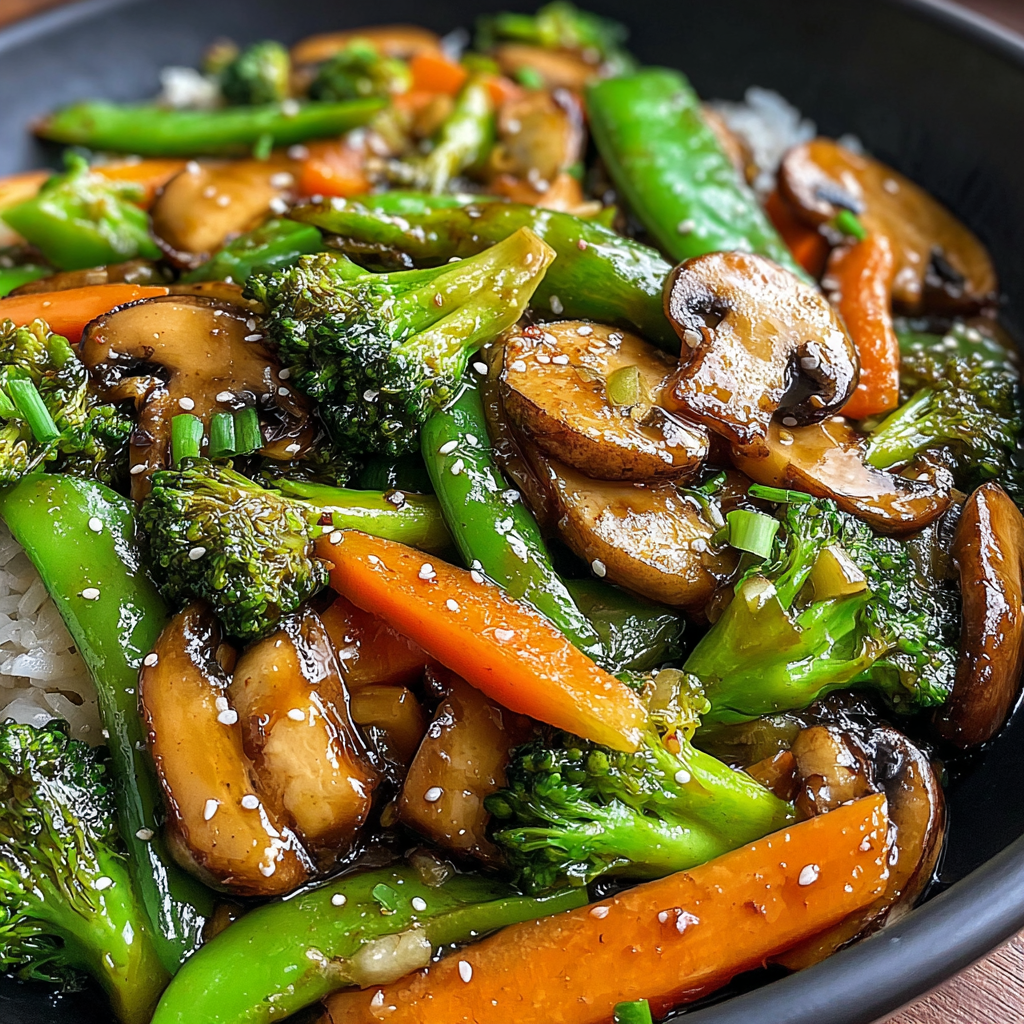
Colorful Vegetarian Stir-Fry for Vibrant Dinners
Ingredients
Method
- Prepare all vegetables by washing and chopping them accordingly.
- Heat vegetable oil in a large wok or skillet over medium-high heat.
- Add minced garlic and ginger, sautéing for about 30 seconds.
- Incorporate the broccoli and carrots into the wok, stir-frying for 2–3 minutes.
- Add the sliced bell pepper, snap peas, and mushrooms; continue to stir-fry for another 3–4 minutes.
- Pour in soy sauce and sesame oil, stirring well to coat the vegetables.
- Cook for an additional minute, then remove from heat.
- Serve hot, garnished with sesame seeds.
Notes
Additional serving suggestions: pair with a crisp salad, garlic bread, or roasted seasonal vegetables for balance.
For make-ahead, prep components separately and assemble just before heating to preserve texture.
Taste and adjust with acid (lemon/vinegar) and salt right at the end to wake up flavors.