Introduction
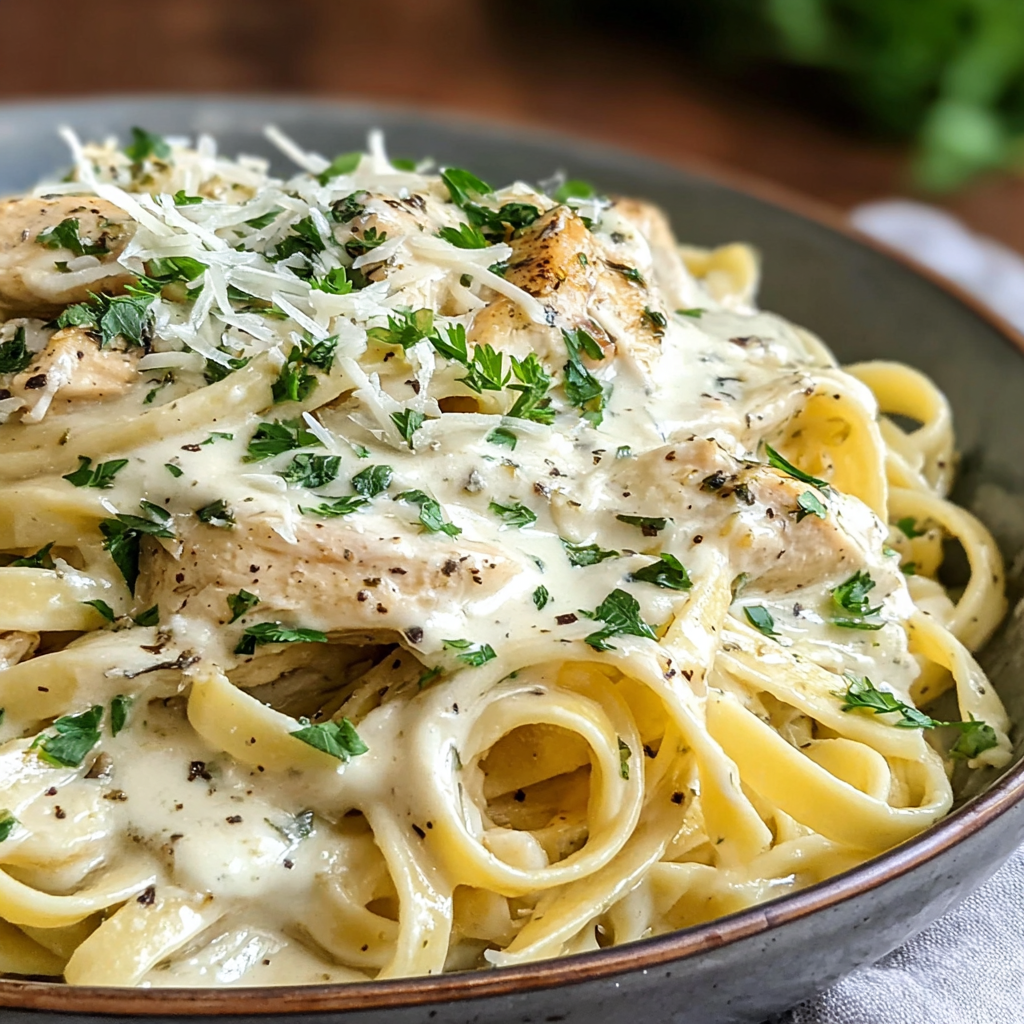
Chicken Fettuccine Alfredo is a timeless Italian dish that brings comfort and indulgence to the dining table. The rich, creamy sauce pairs perfectly with tender chicken and perfectly cooked fettuccine, creating a plate that feels both luxurious and satisfying.
While often enjoyed in restaurants, making this creamy delight at home is simpler than you might think. With a few well-chosen ingredients and a bit of culinary attention, you can deliver a restaurant-quality experience right from your kitchen.
Ingredients
- 12 oz fettuccine
Fettuccine is a flat pasta that holds onto the creamy Alfredo sauce exceptionally well, creating a delightful texture with every bite. - 2 tablespoons olive oil
Used for cooking the chicken, olive oil adds flavor and helps prevent sticking, enhancing the overall taste of the dish. - 1 pound boneless, skinless chicken breasts
The protein base for this dish, chicken breasts are lean and absorb the flavors of the garlic and sauce beautifully, making them juicy and flavorful. - 3 cloves garlic, minced
Garlic adds a fragrant, savory depth to the dish. When sautéed, it enhances the overall flavor profile and complements the creaminess of the sauce. - 1 cup heavy cream
The heart of the Alfredo sauce, heavy cream provides the richness and silkiness that defines this dish, creating a luscious coating for the pasta. - 1 cup freshly grated Parmesan cheese
Parmesan adds a sharp, nutty flavor to the sauce, as well as necessary thickness. Freshly grated cheese melts better and has superior flavor compared to pre-grated options. - Salt and pepper to taste
Essential for seasoning, salt enhances the natural flavors of the ingredients, while pepper adds a hint of warmth and complexity. - Fresh parsley, chopped (optional)
For garnishing, fresh parsley introduces a pop of color and brightness, as well as a fresh herbaceous note that balances the richness of the dish.
Directions & Preparation
Step 1: Cook the fettuccine according to package instructions until al dente.
Cooking the pasta until just al dente ensures it retains a bit of firmness, allowing it to absorb the sauce without becoming mushy. Make sure to salt the water generously, as this is your chance to season the pasta itself. Reserve a cup of pasta water before draining, as it can help adjust the sauce's consistency later.
Step 2: Heat olive oil in a large skillet over medium heat.
Heating the oil allows it to reach the right temperature for cooking the chicken. A properly heated skillet ensures that the chicken gets a nice sear, which locks in juices, creating a flavorful crust. Don't rush this step, as it sets the foundation for the dish.
Step 3: Add the chicken breasts and cook until golden brown on both sides and fully cooked through.
Cooking the chicken until golden adds depth to the flavor with a slight caramelization. It's important to let the chicken cook without moving it around too much to develop that nice browning. Use a meat thermometer to check for doneness, aiming for 165°F for safety.
Step 4: Remove the chicken from the skillet and allow it to rest, then slice.
Resting the chicken allows the juices to redistribute, making it more tender and juicy when sliced. Slice it against the grain to ensure maximum tenderness in the finished dish. Set aside while you prepare the sauce.
Step 5: In the same skillet, sauté the minced garlic until fragrant.
Using the residual oil is key here; it infuses the garlic flavor into the skillet. Be cautious not to overcook the garlic, as it can turn bitter quickly. You only want it to soften and become aromatic, which usually takes just 30 seconds to a minute.
Step 6: Pour in the heavy cream, stirring to combine, and bring it to a gentle simmer.
Simmering the cream allows it to slightly thicken and concentrate the flavors. Use a spatula to scrape up any bits left in the pan from the chicken and garlic, as they will add extra flavor to the sauce. Stir regularly to prevent it from scorching on the bottom.
Step 7: Gradually whisk in the grated Parmesan cheese until melted and smooth.
Adding the cheese gradually prevents clumping and ensures a smooth sauce. As the cheese melts, it will combine with the cream to create a thick, luscious texture. Keep stirring until fully incorporated and adjust the heat if necessary to maintain a gentle simmer.
Step 8: Season the sauce with salt and pepper to taste.
Seasoning the sauce at this stage ensures that every component of the dish is perfectly flavored. Taste as you go, adjusting the seasonings to match your preference. Remember that the chicken will add more saltiness to the dish, so be careful not to overdo it.
Step 9: Combine the cooked fettuccine with the sauce, adding reserved pasta water as needed.
Tossing the fettuccine in the sauce right away allows the pasta to absorb some of the flavors. The reserved pasta water is useful for adjusting the consistency of the sauce; add a splash to loosen it if too thick. Ensure that every strand of pasta is coated evenly with sauce.
Step 10: Add the sliced chicken on top and garnish with parsley if desired.
Presenting the chicken atop the pasta not only looks appealing but also allows the flavors to meld together more. The optional parsley provides a fresh note that can cut through the richness of the sauce, making it a balanced meal.

The Secret to Creamy Sauce
The key to an ultra-creamy Alfredo sauce lies in the heavy cream and the process of gradually incorporating the cheese. Using heavy cream provides the necessary fat content that gives the sauce its luxurious texture. Additionally, whisking the cheese in slowly helps prevent clumping, resulting in a silky smooth finish.
Choosing the Right Chicken
For this dish, boneless, skinless chicken breasts are recommended due to their lean nature and ability to cook quickly. They absorb flavors well without overwhelming the dish. If you desire more flavor, consider marinating the chicken beforehand or seasoning it liberally to enhance the overall dish's taste.
Enhancing Flavor Profiles
While classic Chicken Fettuccine Alfredo is delicious as is, there are numerous ways to enhance its flavor profile. Adding a hint of nutmeg to the sauce elevates the dish with an unexpected warmth. Alternatively, incorporating sautéed mushrooms or spinach can add extra depth and nutrition, creating a more complex and enjoyable meal.
FAQs
What can I do if the sauce is too thick?
If your sauce is too thick, gradually add reserved pasta water until you reach your desired consistency. This water, rich in starch, helps to loosen the sauce while maintaining its flavor.
How can I adjust the flavors if the dish tastes bland?
To enhance flavor, consider adding more grated Parmesan or a dash of lemon juice for brightness. Fresh herbs, such as basil or chives, can also elevate the dish's overall taste.
Is it possible to use a different type of pasta?
Yes, while fettuccine is traditional, you can substitute with other pasta types like linguine or even penne. Just keep in mind that the sauce may adhere differently depending on the pasta shape.
Can I include vegetables in this recipe?
Absolutely! Feel free to add lightly sautéed vegetables such as broccoli, peas, or bell peppers for added nutrition and flavor. Make sure to adjust the cooking time accordingly.
What should I do if the chicken is overcooked?
If your chicken is overcooked and dry, consider slicing it thin and tossing it with the sauce to help moisten it. Alternatively, serving it with a side sauce can enhance its moisture and flavor.
Why do I need to reserve pasta water?
Reserving pasta water is crucial because it contains starch that helps bind the sauce to the pasta, ensuring a cohesive dish. It also allows for better control over the sauce's thickness.
Conclusion
Creating Chicken Fettuccine Alfredo at home is not only achievable but also an incredibly satisfying endeavor. With a little practice and attention to detail, you can enjoy this decadent meal anytime, adding your personal touch along the way.
Don't hesitate to experiment with additional ingredients or flavorings to make this dish your own. Whether you're preparing it for a cozy family dinner or a special occasion, Chicken Fettuccine Alfredo is sure to impress.
Recipe Card
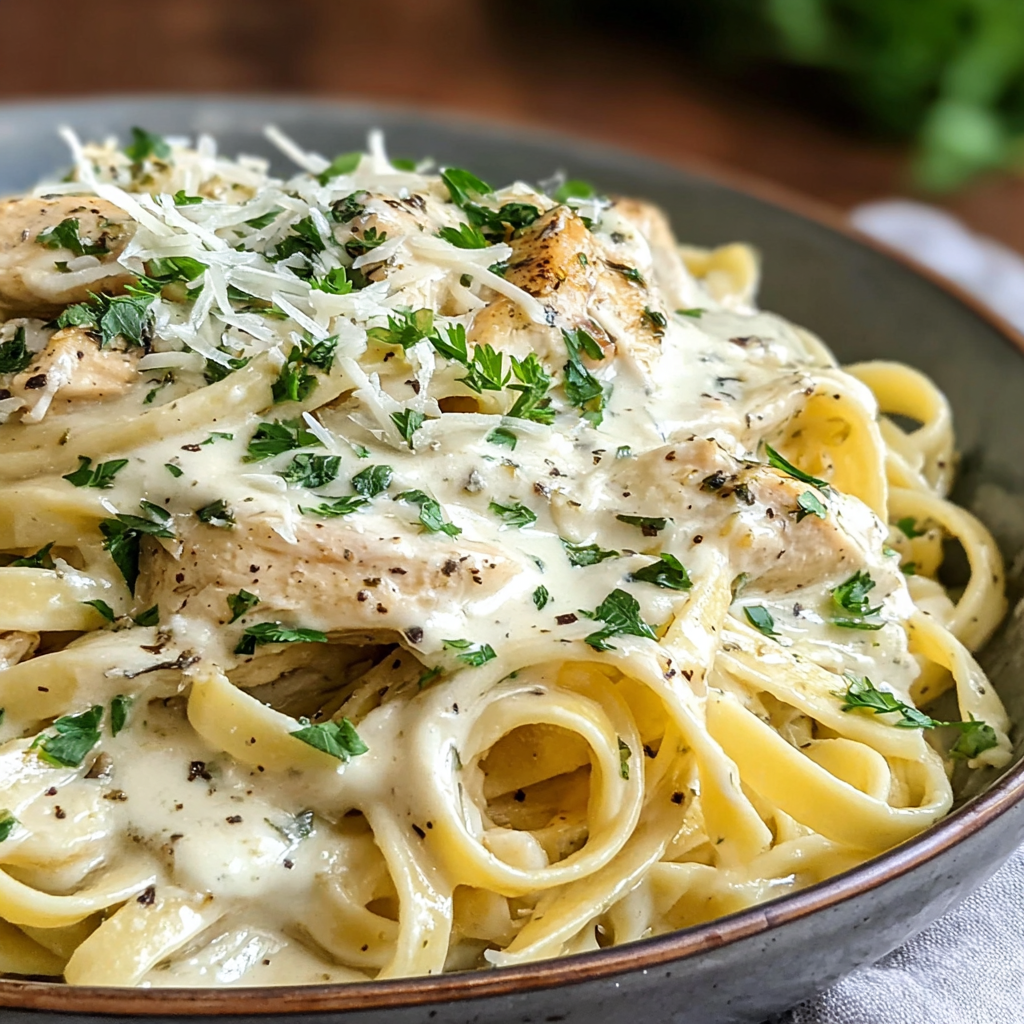
Crafting Chicken Fettuccine Alfredo at Home
Ingredients
Method
- Cook the fettuccine according to package instructions until al dente.
- Heat olive oil in a large skillet over medium heat.
- Add the chicken breasts and cook until golden brown on both sides and fully cooked through.
- Remove the chicken from the skillet and allow it to rest, then slice.
- In the same skillet, sauté the minced garlic until fragrant.
- Pour in the heavy cream, stirring to combine, and bring it to a gentle simmer.
- Gradually whisk in the grated Parmesan cheese until melted and smooth.
- Season the sauce with salt and pepper to taste.
- Combine the cooked fettuccine with the sauce, adding reserved pasta water as needed.
- Add the sliced chicken on top and garnish with parsley if desired.
Notes
Additional serving suggestions: pair with a crisp salad, garlic bread, or roasted seasonal vegetables for balance.
For make-ahead, prep components separately and assemble just before heating to preserve texture.
Taste and adjust with acid (lemon/vinegar) and salt right at the end to wake up flavors.