Introduction
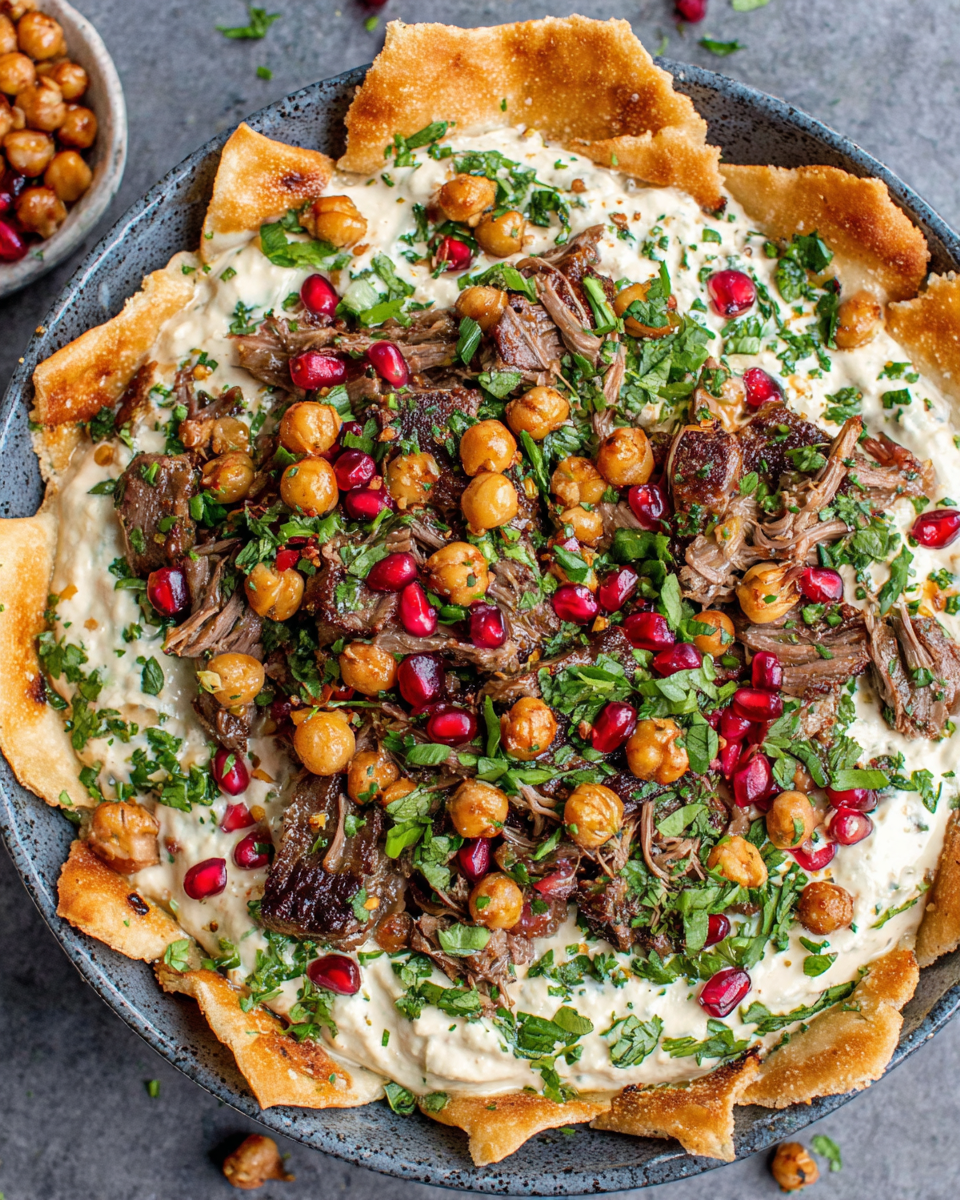
Fatteh is a beloved dish that encapsulates the vibrant flavors of Middle Eastern cuisine, featuring layers of toasted pita, creamy hummus, and tangy yogurt. This traditional dish is not only comforting but also highly versatile, allowing home cooks to customize it with their favorite ingredients.
The beauty of Fatteh lies in its texture and taste contrasts. The crunch of the pita chips complements the smoothness of the hummus and the refreshing coolness of the yogurt, creating a delightful eating experience that is both satisfying and nourishing. Whether enjoyed as a starter or a main course, Fatteh has a way of bringing people together around the table.
Ingredients
- 4 pieces of pita bread
Pita bread serves as the base for this dish, providing a crunchy texture when toasted. It absorbs the flavors of the toppings while offering a slight chewiness that enhances the overall enjoyment. - 1 cup of hummus
Hummus adds a creamy layer to the dish, made from blended chickpeas, tahini, and garlic. Its flavors complement the yogurt and pita while providing a good source of protein. - 2 cups of yogurt
Yogurt, especially when using strained or Greek yogurt, brings a tangy element that balances the richness of the hummus. It also adds a creamy consistency and a refreshing bite. - 2 tablespoons of olive oil
Olive oil drizzled over the top enhances the dish's flavor and richness. It also brings a sheen to the presentation, making the dish more appealing. - 1 teaspoon of ground cumin
Cumin adds a warm, earthy tone to the overall flavor profile of Fatteh. It’s a common spice in Middle Eastern cooking, enhancing the taste without overpowering the other ingredients. - Salt to taste
Salt ensures that all the flavor elements in the dish are balanced and pronounced. Adjusting this ingredient is crucial to elevate the overall taste. - Chopped fresh parsley for garnish
Parsley not only adds a burst of color but also brings freshness, balancing the rich flavors with its herbaceous notes. - Chili flakes (optional)
For those who enjoy a bit of heat, chili flakes can be sprinkled on top. They provide a spicy kick that contrasts well with the creaminess of the other ingredients.
Directions & Preparation
Step 1: Preheat the oven to 350°F (175°C).
Preheating the oven is essential to ensure that your pita bread becomes crispy. The heat needs to be distributed evenly when you place the pita in, allowing it to toast perfectly without becoming burnt.
Step 2: Cut the pita bread into triangles or strips.
Cutting the pita into smaller pieces allows for more surface area when toasting, leading to a crunchier texture. The size can be adjusted based on personal preference, but uniform sizes help them toast evenly.
Step 3: Spread the pita pieces on a baking sheet and drizzle with olive oil.
Drizzling olive oil on the pita ensures that every piece receives flavor while also helping them crisp up in the oven. Tossing them gently to coat evenly can maximize the toasting effect.
Step 4: Toast the pita in the oven for about 8-10 minutes or until golden brown.
Oven-toasting is preferred as it allows for even cooking, ensuring every piece turns golden and crisp. Keep an eye on them to prevent burning—every oven can vary slightly.
Step 5: While the pita is toasting, prepare the serving dish by layering the hummus.
Layering order matters in Fatteh as it defines the dish's texture. Spreading hummus as the first layer allows the pita to soak in some of its creaminess, setting a flavorful base.
Step 6: Once the pita is toasted, layer it over the hummus in the serving dish.
Layering the crispy pita on top of the hummus creates a delightful contrast in textures. The warmth from the pita will slightly soften the hummus, enhancing its flavor.
Step 7: Add the yogurt on top of the toasted pita chips.
Placing the yogurt on top creates a rich, creamy layer that contrasts beautifully with the crispy pita and smooth hummus beneath. Spreading it evenly ensures every bite is balanced.
Step 8: Drizzle olive oil over the yogurt and sprinkle with cumin, salt, and chili flakes if using.
The olive oil adds a rich flavor, while cumin and salt elevate all the layers. This step enhances each flavor while providing a glossy finish, making the dish visually appealing.
Step 9: Garnish with chopped parsley just before serving.
Garnishing with parsley not only adds color but also a fresh burst of flavor. Adding it last ensures it retains its vibrant color and doesn't wilt.

Creative Serving Suggestions for Fatteh
Fatteh is incredibly versatile; consider topping it with sautéed vegetables, spiced ground meat, or even grilled chicken for a heartier meal. The dish can also act as a base for seasonal vegetables or a side of roasted chickpeas, allowing you to integrate your favorite flavors.
The Perfect Sides to Accompany Fatteh
Complement your Fatteh with side dishes like tabbouleh or a simple fattoush salad to add freshness and crunch. You can also serve it with additional hummus or baba ghanoush for dipping to enrich the meal further.
Health Benefits of Fatteh Ingredients
This dish not only satisfies cravings but also offers nutritional benefits. Ingredients like hummus are rich in protein and fiber, while yogurt provides probiotics that aid digestion. Fresh herbs like parsley boost vitamin K levels, making Fatteh a wholesome choice.
FAQs
What can I add to enhance the flavors of the hummus?
You can add roasted garlic, lemon juice, or tahini to deepen the flavor of the hummus used in Fatteh.
How do I fix Fatteh that's too thick?
If your Fatteh is too thick after layering, try adding a few tablespoons of water or extra yogurt to loosen it up before serving.
Can I use store-bought pita bread?
Yes, using store-bought pita bread can save time. Just make sure to toast it well to achieve the desired crunch.
What if I want a vegetarian version?
The base recipe is already vegetarian, and you can enhance it with grilled vegetables or more legumes to add heartiness.
How can I elevate the yogurt layer?
You can flavor the yogurt layer with garlic, herbs, or spices like za'atar to give it an extra punch.
What if I don't have olive oil?
You can use any neutral oil as a substitute, but try to stick to those with good flavor like avocado or sesame oil.
Conclusion
Fatteh is more than just a dish; it's a celebration of texture, flavor, and the joy of sharing food with loved ones. Each layer complements the others, creating a harmonious balance that is sure to satisfy any palate.
Encourage your creative instincts by experimenting with different toppings and sides. With Fatteh, every cooking session is an opportunity to explore the flavors of the Middle East, making it a cherished addition to your culinary repertoire.
Recipe Card
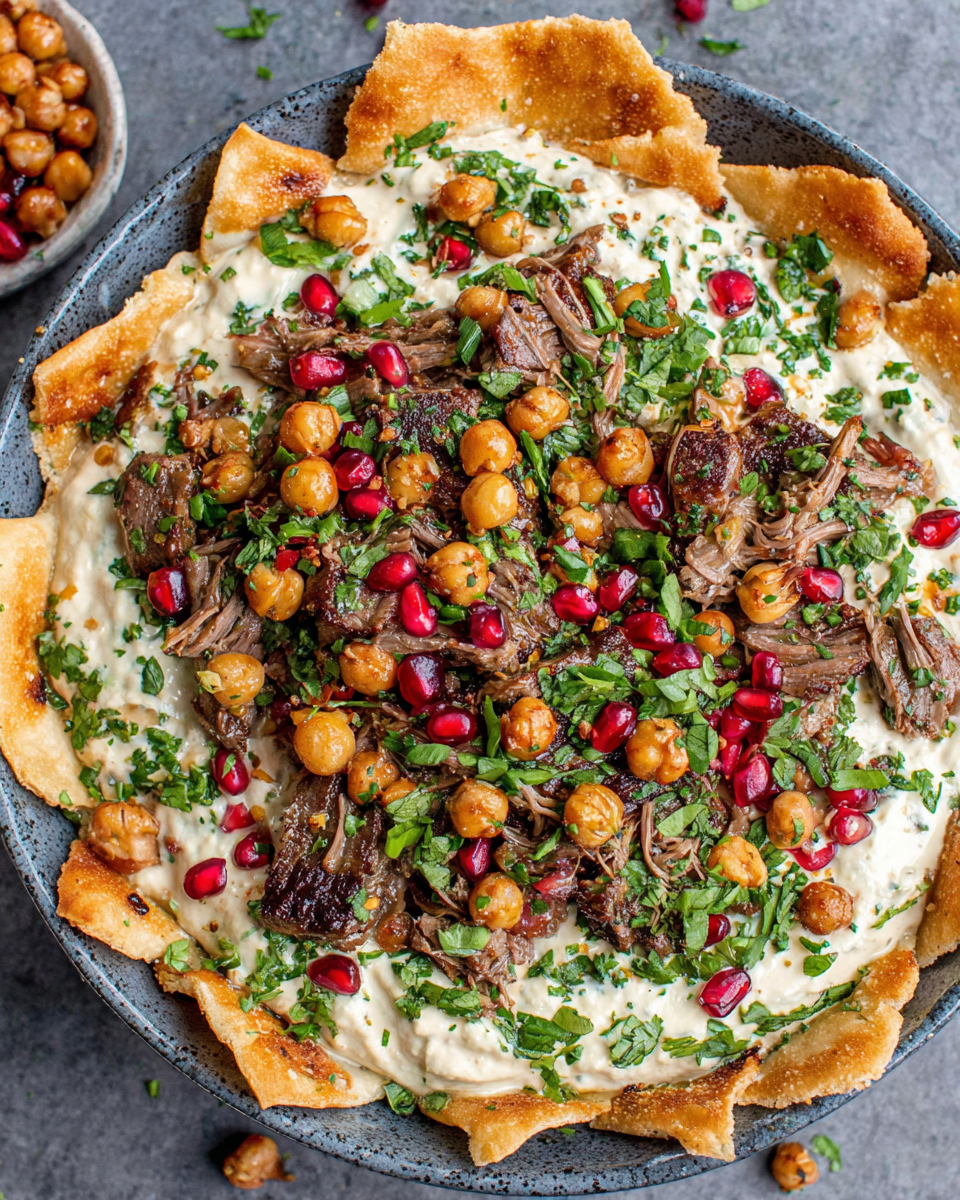
Exploring the Layers of Fatteh with Pita and Hummus
Ingredients
Method
- Preheat the oven to 350°F (175°C).
- Cut the pita bread into triangles or strips.
- Spread the pita pieces on a baking sheet and drizzle with olive oil.
- Toast the pita in the oven for about 8-10 minutes or until golden brown.
- While the pita is toasting, prepare the serving dish by layering the hummus.
- Once the pita is toasted, layer it over the hummus in the serving dish.
- Add the yogurt on top of the toasted pita chips.
- Drizzle olive oil over the yogurt and sprinkle with cumin, salt, and chili flakes if using.
- Garnish with chopped parsley just before serving.
Notes
Additional serving suggestions: pair with a crisp salad, garlic bread, or roasted seasonal vegetables for balance.
For make-ahead, prep components separately and assemble just before heating to preserve texture.
Taste and adjust with acid (lemon/vinegar) and salt right at the end to wake up flavors.