Introduction
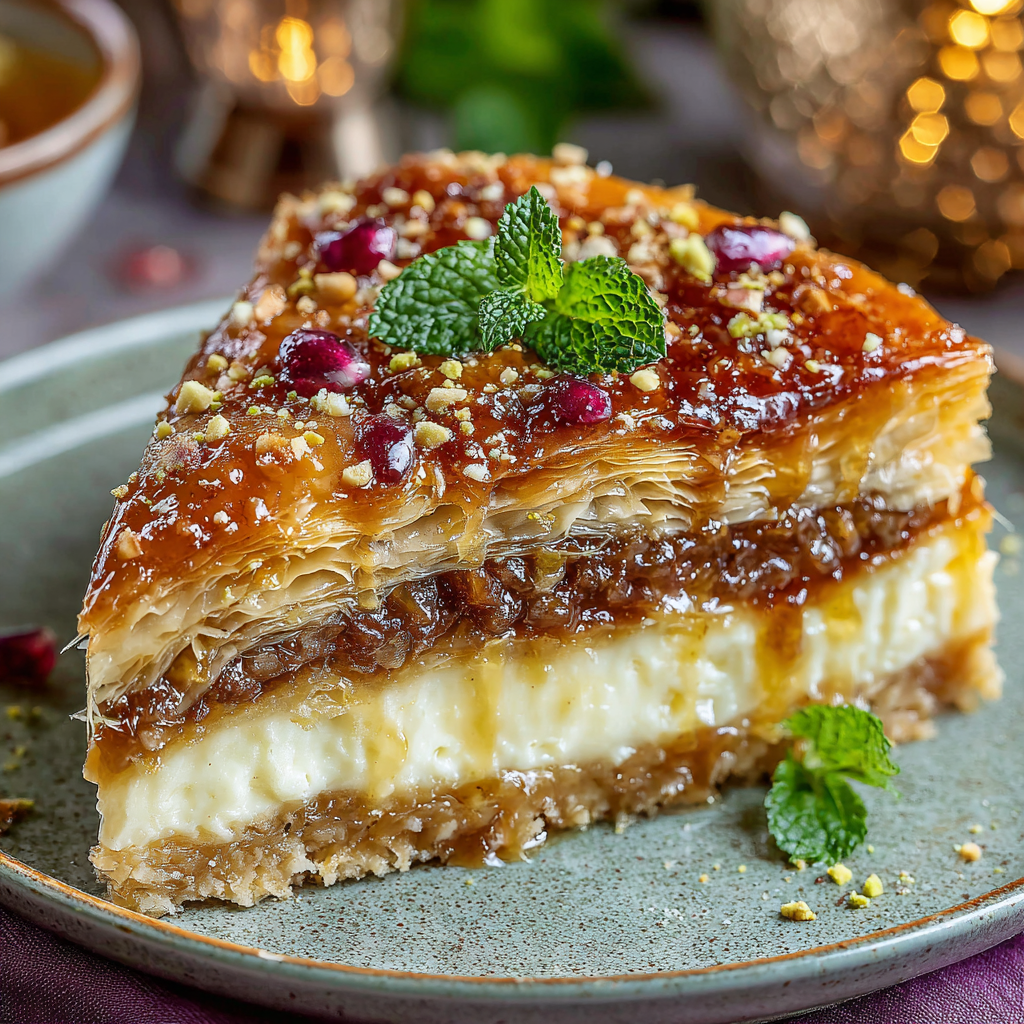
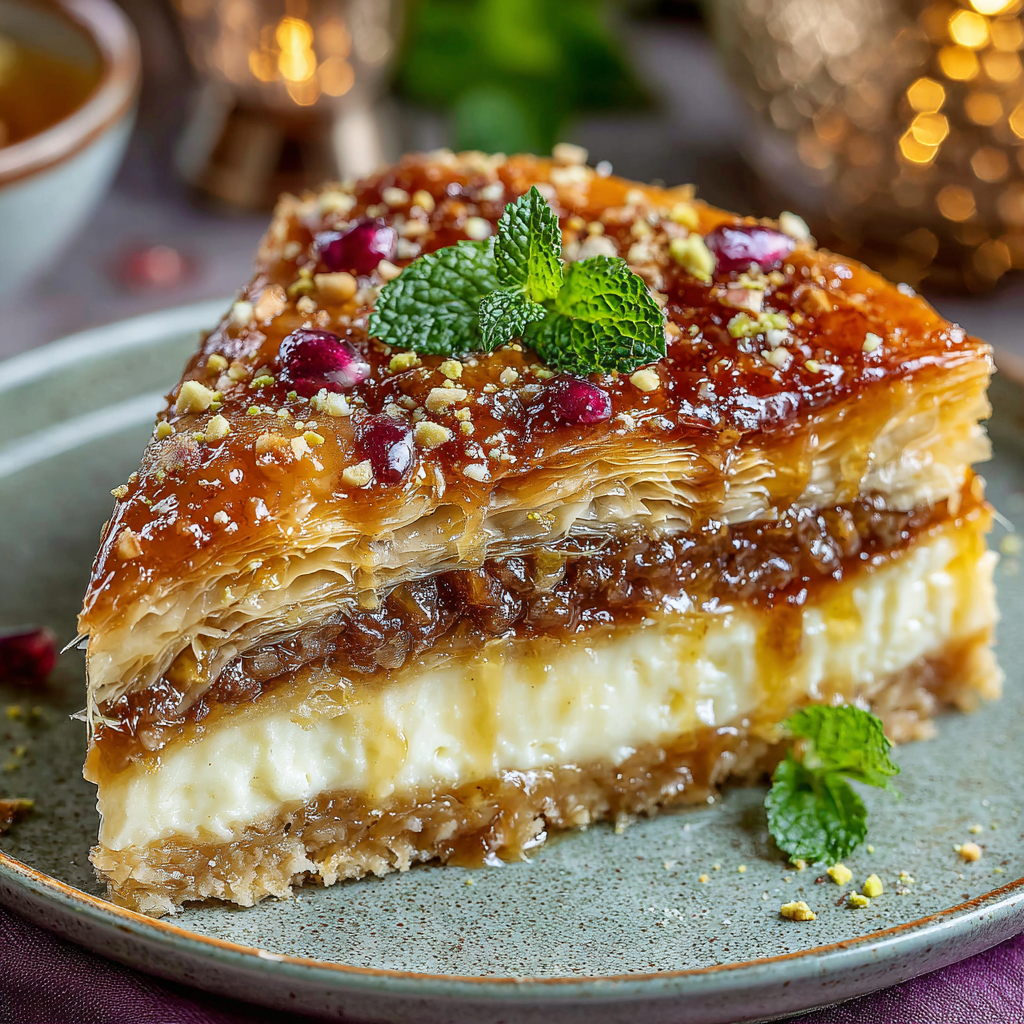
If you’re craving a dessert that marries two beloved classics, look no further than baklava cheesecake. This decadent fusion combines the rich, creamy texture of cheesecake with the flaky, nutty goodness of baklava, creating a delightful dessert that will impress any crowd.
Baklava cheesecake is not just visually stunning; it’s bursting with flavors that play off each other beautifully. The honey and spice-infused layers of baklava contrast perfectly with the smooth, tangy cheesecake, offering a multi-dimensional taste experience.
Perfect for special occasions or a sweet treat on a cozy evening, this recipe allows home cooks to showcase their skills while enjoying a truly unique dessert. Gather your ingredients, and let’s get started on this luxurious creation.
Ingredients
- 2 cups crushed phyllo dough
Phyllo dough provides the distinctive flaky texture characteristic of baklava. When crushed and layered with butter and nuts, it creates a rich crust that complements the smooth cheesecake layer. - 1 cup unsalted butter, melted
Butter adds richness and moisture to the phyllo dough layers, helping to crisp them up during baking. It also enhances the flavor, contributing to the overall indulgent experience. - 1 cup walnuts, finely chopped
Walnuts are a key ingredient in traditional baklava, offering a nutty crunch and subtle bitterness that balances the sweetness of the honey and other ingredients. - 1 cup sugar
Sugar sweetens the cheesecake and the baklava layers, ensuring that each bite is a harmonious blend of flavors. It is crucial in achieving the right texture and taste for the dessert. - 3 (8 oz) packages cream cheese, softened
Cream cheese is the base for the cheesecake filling, delivering a creamy, decadent texture. Its tanginess provides a delightful contrast to the sweetness of the baklava and syrup. - 1 teaspoon vanilla extract
Vanilla extract enhances the overall flavor profile of the cheesecake, complementing both the sweet and savory notes from the baklava layers. It adds depth and warmth to the dessert. - 3 large eggs
Eggs are essential for binding the cheesecake ingredients together while providing structure and richness. They help the cheesecake set properly during baking. - 1/2 cup honey
Honey infuses the dessert with a floral sweetness, reminiscent of traditional baklava. It serves as a natural sweetener while also adding moisture to the final product. - 1 teaspoon ground cinnamon
Cinnamon adds a warm spice that enhances the dessert's aroma and flavor, creating a comforting and inviting profile that is synonymous with baklava. - 1/4 cup water
Water is used in the syrup which drizzles over the cheesecake, balancing out the sweetness and ensuring the baklava layers remain moist and tender.
Directions & Preparation
Step 1: Preheat the oven to 350°F (175°C).
Preheating your oven is crucial as it allows for even baking. A properly heated oven will help to set the cheesecake filling correctly, ensuring a smooth texture without cracks. Make sure it reaches the desired temperature before you start baking your cheesecake.
Step 2: Prepare the phyllo crust by mixing the crushed phyllo with melted butter and walnuts.
Toss the crushed phyllo dough with melted butter and chopped walnuts until evenly coated. This mixture will form the crunchy base of your baklava cheesecake. The butter ensures the layers are crisp, while the walnuts bring in that rich nutty flavor.
Step 3: Press the phyllo mixture into the bottom of a springform pan.
Firmly press the phyllo and walnut blend into the bottom of the springform pan to form a solid crust. This layering technique is essential for a sturdy base that can support the creamy cheesecake on top and provide that delightful crunch.
Step 4: In a bowl, beat the cream cheese until smooth, then add sugar, vanilla, and honey.
Beating the cream cheese first helps to avoid lumps, leading to a smoother cheesecake filling. Integrating sugar, vanilla, and honey at this stage enhances the creaminess and infuses the filling with sweetness and flavor that complements the baklava layers.
Step 5: Add the eggs one at a time, mixing well after each addition.
Adding eggs one by one helps to maintain a uniform texture in the cheesecake. This method ensures that each egg is well incorporated, allowing for a light and airy filling that sets beautifully during baking.
Step 6: Lastly, mix in cinnamon and pour the batter over the phyllo crust.
Incorporating cinnamon at this stage brings a warm, aromatic flavor to the cheesecake. Pouring it over the phyllo crust creates a delightful contrast with the flaky base, setting the stage for the additional layers.
Step 7: Bake for 40-45 minutes until the center is set.
Baking the cheesecake until it is just set ensures a creamy texture without overcooking. It’s important to monitor closely; the edges should be firm, while the center may still jiggle slightly. This will yield a perfect balance of firmness and creaminess.
Step 8: While baking, make the baklava syrup by combining sugar, water, and honey in a pot over medium heat.
Preparing the syrup while the cheesecake is baking allows the flavors to meld together. The gentle heat helps dissolve the sugar, and the blend of honey adds that characteristic sweetness, which will soak into the cheesecake once it cools.
Step 9: Reduce the heat, add cinnamon, and simmer for about 10 minutes.
Simmering the syrup helps concentrate the flavors. This step allows the aromas to develop, and the syrup thickens slightly, ensuring it coats the cheesecake beautifully when drizzled on top.
Step 10: Let the cheesecake cool before drizzling with syrup.
Cooling the cheesecake before adding syrup is essential; it prevents the syrup from soaking in too quickly and helps maintain the texture of the dessert. Allowing it to cool also makes slicing easier and neater.
Step 11: Serve chilled with a sprinkle of crushed walnuts, if desired.
Serving the cheesecake chilled enhances its flavor and texture, making it refreshing yet indulgent. A sprinkle of crushed walnuts on top adds an appealing aesthetic and further celebrates the flavors of baklava.

The Art of Layering Flavors
Creating a baklava cheesecake is all about layering flavors and textures. The combination of flaky phyllo, rich cheesecake, and nutty walnuts makes every bite an experience. This recipe encourages experimentation; you can adjust spice levels or switch nuts to create a personalized version. Each layer contributes to an overall harmonious dessert.
Pairing Suggestions
Baklava cheesecake pairs beautifully with a variety of beverages and sides. Consider serving it with a scoop of vanilla ice cream or a dollop of Greek yogurt for a creamy contrast. A cup of spiced chai or Turkish coffee complements the dessert perfectly, enhancing the warm spices while providing a delightful way to cleanse the palate.
Tips for Success
To achieve the best results, ensure all your ingredients, particularly the cream cheese, are at room temperature. This creates a smoother batter, reducing the risk of lumps. Additionally, be mindful of your baking time; overbaking can lead to cracks. Keeping an eye on the cheesecake toward the end of the baking process can help you achieve that perfect creamy consistency.
FAQs
What can I use instead of walnuts in the baklava layers?
You can substitute walnuts with pecans or pistachios for a different nutty flavor and texture. Just make sure to chop them finely.
Why is my cheesecake too dense?
If your cheesecake is too dense, it might have been overmixed or overbaked. Ensure you're mixing just until combined and checking for doneness early to maintain a creamy texture.
Can I use store-bought phyllo dough instead of making my own?
Yes, store-bought phyllo dough is recommended for convenience. It provides the flaky texture needed for baklava without the hassle of making it from scratch.
How can I tell when the cheesecake is done?
The cheesecake is done when the edges are set, but the center still has a slight jiggle. It will firm up as it cools.
What should I do if my cheesecake cracks on top?
If your cheesecake cracks, it may have been baked too long or at too high a temperature. Covering it with the syrup and walnuts will hide any imperfections and add flavor.
Can I modify the spices used in this recipe?
Absolutely! Feel free to adjust the cinnamon or add nutmeg or cardamom to suit your taste preferences and enhance the baklava flavor.
Conclusion
In creating a baklava cheesecake, you not only craft a beautiful dessert but also explore a world of flavors. The fusion of two traditional recipes will surely make it a favorite for your friends and family.
Whether it’s for a special celebration or an everyday treat, this dessert is bound to impress. Enjoy the journey of baking and savor every delectable bite.
Recipe Card
Indulgent Baklava Cheesecake Recipe for Home Cooks
Ingredients
Method
- Preheat the oven to 350°F (175°C).
- Prepare the phyllo crust by mixing the crushed phyllo with melted butter and walnuts.
- Press the phyllo mixture into the bottom of a springform pan.
- In a bowl, beat the cream cheese until smooth, then add sugar, vanilla, and honey.
- Add the eggs one at a time, mixing well after each addition.
- Lastly, mix in cinnamon and pour the batter over the phyllo crust.
- Bake for 40-45 minutes until the center is set.
- While baking, make the baklava syrup by combining sugar, water, and honey in a pot over medium heat.
- Reduce the heat, add cinnamon, and simmer for about 10 minutes.
- Let the cheesecake cool before drizzling with syrup.
- Serve chilled with a sprinkle of crushed walnuts, if desired.
Notes
Additional serving suggestions: pair with a crisp salad, garlic bread, or roasted seasonal vegetables for balance.
For make-ahead, prep components separately and assemble just before heating to preserve texture.
Taste and adjust with acid (lemon/vinegar) and salt right at the end to wake up flavors.