Introduction
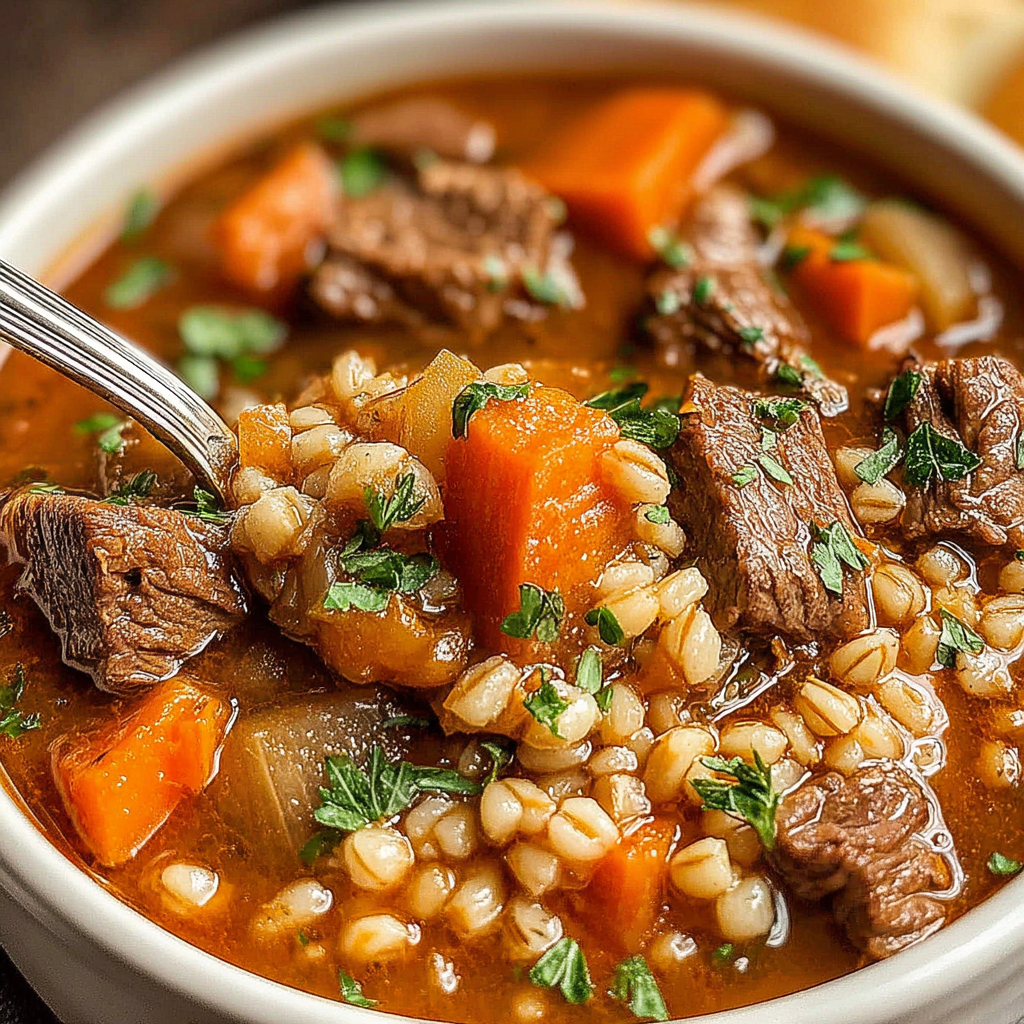
There's something incredibly comforting about a warm bowl of beef and barley soup. This hearty dish is not only filling but also packed with nutrients from vegetables and whole grains. It’s an ideal meal for chilly nights when you crave something that warms both the body and soul.
Beef and barley soup has a rich history, often enjoyed as a staple in many cultures. The savory flavors of beef combined with the nutty texture of barley create a satisfying meal that's both delicious and nourishing. Whether you’re feeding a crowd or enjoying a quiet evening at home, this recipe is sure to please.
Ingredients
- 1 lb beef chuck, cut into cubes
Beef chuck is ideal for this recipe because it becomes tender during simmering and infuses the soup with rich flavor. The marbling in chuck roast adds depth, and when cooked low and slow, it becomes melt-in-your-mouth tender. - 1/2 cup pearl barley
Pearl barley adds heartiness to the soup, soaking up flavors while providing a nutty taste and chewy texture. It's a whole grain that also contributes fiber, making this dish more filling. - 1 medium onion, diced
Onions form the base flavor for this soup, releasing sweetness as they cook. They add aromatic depth, essential for building the overall taste profile. - 2 carrots, diced
Carrots provide a natural sweetness and vibrant color to the soup. Rich in vitamins, they complement the beef and barley well, adding both flavor and nutrients. - 2 stalks of celery, diced
Celery introduces a slight crunch and aromatic quality to the soup. It's essential for the classic mirepoix base that enhances the dish's overall flavor. - 3 cloves garlic, minced
Garlic adds a wonderful depth of flavor with its aromatic qualities. Its bold taste complements the beef beautifully and is key to enhancing the soup's savory notes. - 6 cups beef broth
Using beef broth as the soup base amplifies the beef flavor while providing moisture. It’s essential for simmering all ingredients to meld together. - 1 tsp dried thyme
Thyme offers an earthy, slightly minty flavor that pairs well with beef and vegetables. It’s a classic herb used in many savory dishes that adds complexity to the soup. - 1 bay leaf
Bay leaves impart a subtle floral aroma and depth of flavor when simmered. They’re crucial for rounding out the taste profile in brothy soups. - Salt and pepper to taste
Seasoning is a vital step for enhancing and balancing all the flavors in the soup. Proper seasoning brings out the best in each ingredient, making it taste harmonious.
Directions & Preparation
Step 1: In a large pot, heat a tablespoon of oil over medium-high heat.
Heating the oil first allows you to nicely sear the beef. This step is crucial for developing a rich flavor through the Maillard reaction, which occurs when the meat browns. Searing the beef also locks in juices, resulting in a more tender product.
Step 2: Add the cubed beef to the pot and brown on all sides, about 5-7 minutes.
Browning the beef enhances its taste and gives the soup a deeper color and rich meatiness. Be careful not to overcrowd the pot; this might cause steaming instead of browning.
Step 3: Remove the browned beef and set aside. In the same pot, add onion, carrots, celery, and garlic. Sauté until softened, about 5 minutes.
Cooking the mirepoix (onions, carrots, and celery) releases their flavors into the base. Sautéing these vegetables until they soften develops a sweet and fragrant background that enhances the overall flavor of the soup.
Step 4: Return the beef to the pot and stir in the pearl barley, thyme, bay leaf, and beef broth.
By returning the browned beef, you integrate all the meaty flavor back into the soup. The barley needs direct contact with the broth to cook properly, absorbing its flavors while lending a hearty texture.
Step 5: Bring the soup to a boil, then reduce the heat to low and cover, letting it simmer for 1.5 to 2 hours.
Simmering at a low heat allows the flavors to meld beautifully as the beef becomes tender. Keeping the pot covered helps preserve moisture and heat, ensuring the barley cooks thoroughly without drying out.
Step 6: Once the beef is tender and the barley is cooked, season the soup with salt and pepper to taste, and remove the bay leaf before serving.
Adjusting the seasoning at the end allows you to tailor the flavor to your preference, making sure the natural flavors come through without being overpowered. Removing the bay leaf ensures you won’t have any bitterness from it in the final dish.

The Role of Barley in Your Soup
Barley is not just a filler in this dish; it serves as a whole grain that contributes not only texture but nutrition as well. Its nutty flavor profile enhances the overall richness of the soup while providing soluble fiber, great for digestion. This makes it a beneficial choice for those looking to incorporate more whole grains into their diet.
Choosing the Right Cut of Beef
Opting for beef chuck is ideal for this soup, as its rich fat content transforms during cooking, yielding a tender texture that contrasts beautifully with the chewy barley. This cut also enhances the flavor significantly, giving the broth a deeper, fuller taste compared to leaner beef options. Always aim for quality cuts to maximize the soup’s satisfaction.
Herbs and Spices to Enhance Flavor
The subtle interplay of thyme and bay leaves elevates the taste of this beef and barley soup tremendously. These herbs impart a layered complexity that you might find lacking in soups without proper seasoning. Experimenting with fresh herbs can also open the door to more aromatic aromas and flavors, offering a delightful homemade experience.
FAQs
What if the soup is too thick after cooking?
If the soup turns out too thick, simply add a cup of warm beef broth or water and stir until the desired consistency is reached. This will loosen the soup while maintaining its flavor.
Can I add other vegetables to this soup?
Absolutely! Feel free to incorporate vegetables like peas, green beans, or potatoes. Just make sure to adjust cooking times as needed to maintain the texture and flavor.
What can I do if the soup is bland?
If your soup tastes bland, try adding a splash of vinegar or a squeeze of lemon juice to brighten the flavors. Additionally, adjusting the salt and pepper can really enhance the overall taste.
Can I make this soup in a slow cooker?
Yes, for a slow cooker version, brown the beef and sauté the vegetables first, then add them to the slow cooker with the rest of the ingredients and cook on low for 6-8 hours.
Is it possible to scale this recipe up for a larger gathering?
Certainly! You can multiply the ingredients to feed a crowd, just remember to ensure your pot has enough capacity. Additionally, adjust the cooking times if needed.
Can I substitute chicken for beef?
Yes, you can substitute chicken, but be aware that cooking times will change, and chicken has a different taste profile. Consider using chicken thighs for better flavor.
Conclusion
Beef and barley soup embodies the essence of comfort food, delivering warmth and heartiness all in one pot. It's a dish that not only satisfies hunger but also invites you to share around the dinner table.
Once you've mastered this recipe, feel free to experiment with different herbs or grains. Each bowl can become a unique creation, reflecting your personal taste and preferences.
Recipe Card
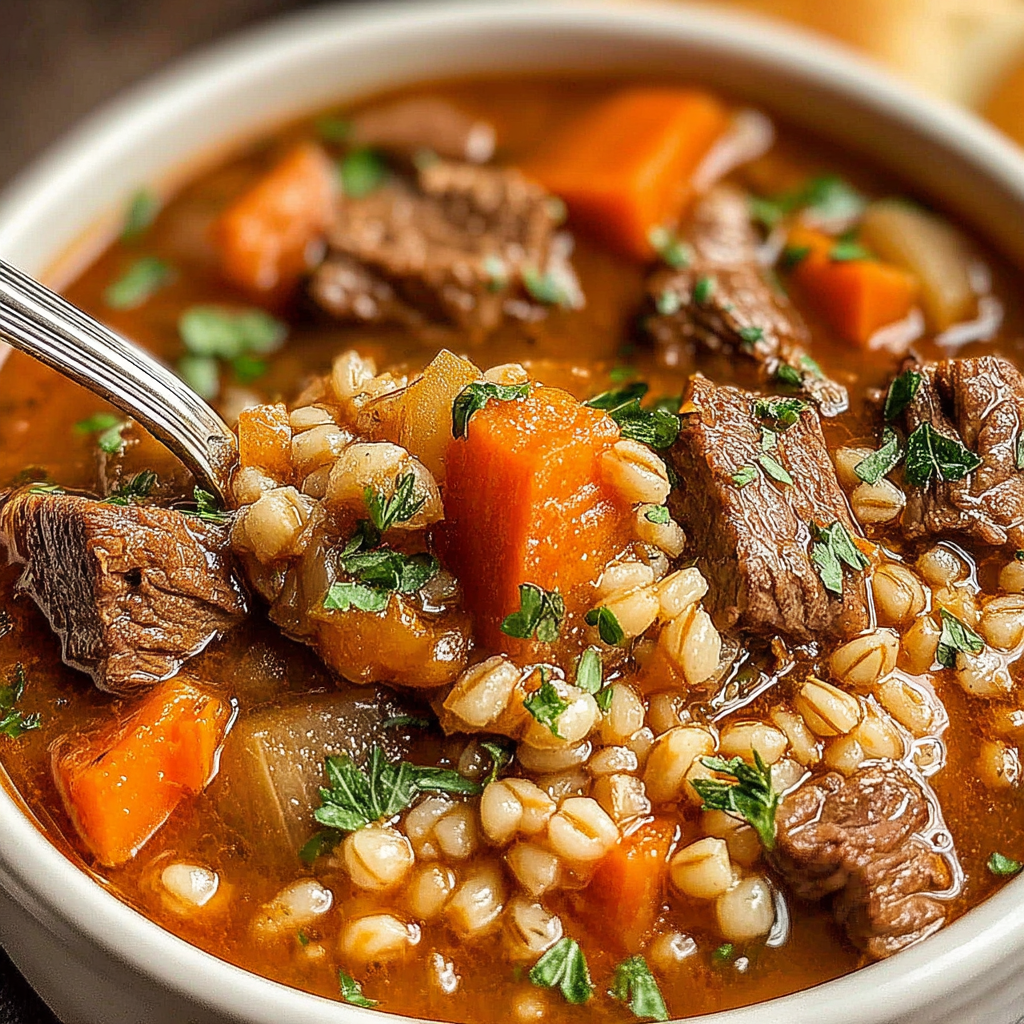
Nourishing Beef and Barley Soup Recipe for Home Cooks
Ingredients
Method
- In a large pot, heat a tablespoon of oil over medium-high heat.
- Add the cubed beef to the pot and brown on all sides, about 5-7 minutes.
- Remove the browned beef and set aside. In the same pot, add onion, carrots, celery, and garlic. Sauté until softened, about 5 minutes.
- Return the beef to the pot and stir in the pearl barley, thyme, bay leaf, and beef broth.
- Bring the soup to a boil, then reduce the heat to low and cover, letting it simmer for 1.5 to 2 hours.
- Once the beef is tender and the barley is cooked, season the soup with salt and pepper to taste, and remove the bay leaf before serving.
Notes
Additional serving suggestions: pair with a crisp salad, garlic bread, or roasted seasonal vegetables for balance.
For make-ahead, prep components separately and assemble just before heating to preserve texture.
Taste and adjust with acid (lemon/vinegar) and salt right at the end to wake up flavors.