Introduction
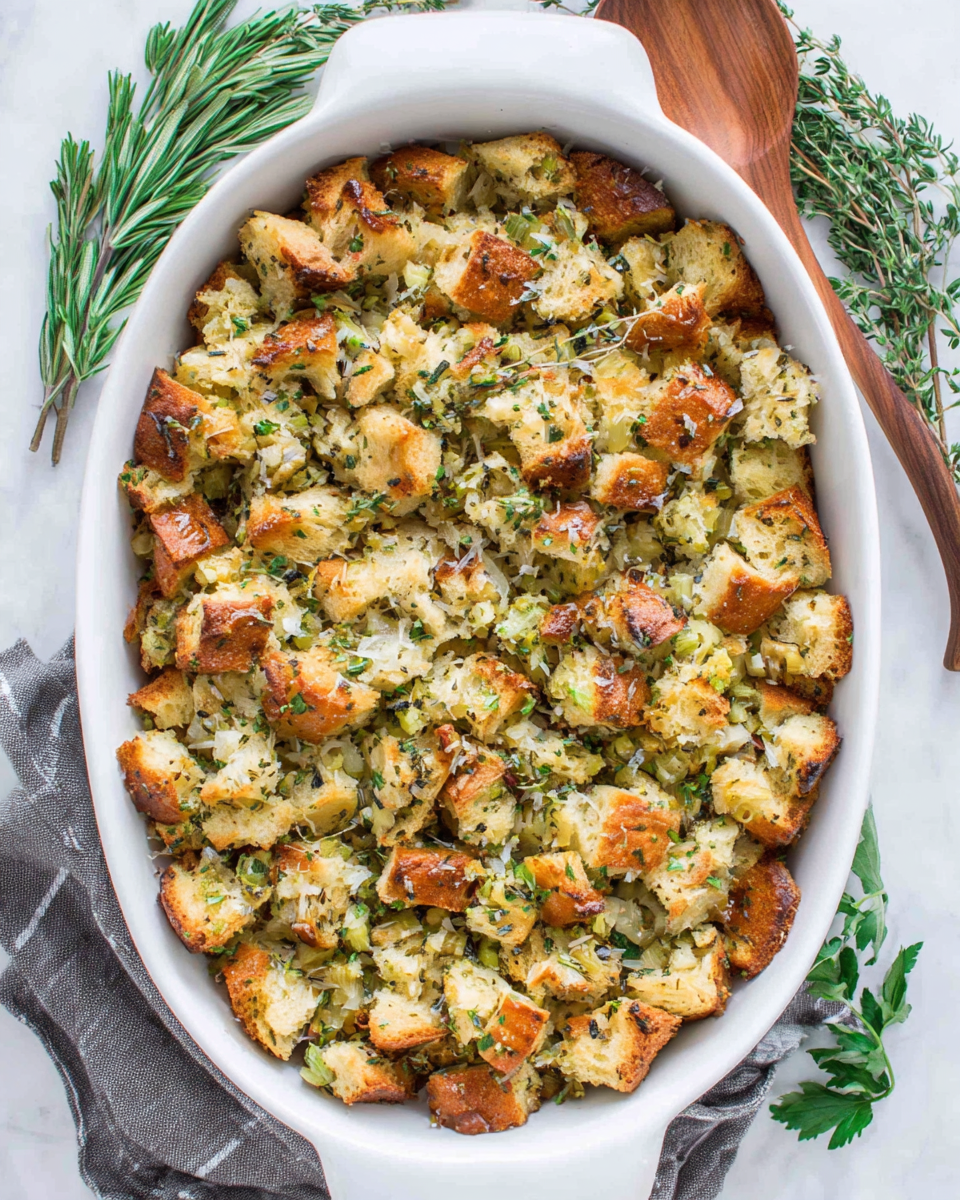
Thanksgiving wouldn't be complete without a generous helping of stuffing on the side. Our Favorite Buttery Herb Stuffing is a time-honored dish that elevates any holiday spread with its rich flavors and comforting texture. Combining fresh herbs, crusty bread, and plenty of butter, this stuffing captures the essence of the season.
What makes it truly special is how it melds together the aromas of aromatic herbs like sage and thyme, creating an inviting atmosphere around the dinner table. It's versatile enough to stand alone or accompany your turkey, making it a staple at any Thanksgiving celebration.
Ingredients
- 1 loaf of day-old bread (about 12 cups, cubed)
Using day-old bread helps achieve a sturdier texture that can hold up against the broth and spices. The cubes should be a mix of crusty sourdough or French bread to add depth. - 1 cup unsalted butter
Butter adds rich flavor and moisture to the stuffing. Starting with unsalted butter allows you to better control the saltiness of the dish as you add stock. - 1 large onion, diced
Onions provide sweetness and depth to the stuffing, caramelizing beautifully when sautéed. They are also the base flavor in many savory dishes. - 3 ribs celery, diced
Celery contributes a crunchy texture and a subtle earthy flavor that balances the richness of the butter while helping to build a flavor base. - 4 cloves garlic, minced
Garlic adds a punch of flavor and aroma, essential to infusing the stuffing with warmth and complexity. - 1 cup chicken or vegetable broth
The broth introduces significant moisture to the stuffing and enhances the overall flavor. Using homemade or high-quality broth can really elevate the taste. - 1 tablespoon fresh sage, chopped
Sage is the classic herb for Thanksgiving stuffing, offering a robust and slightly peppery flavor that pairs beautifully with turkey. - 1 teaspoon fresh thyme, chopped
Thyme adds a mild, slightly minty flavor that complements the earthy notes of sage and rounds out the stuffing. - 1 teaspoon salt
Salt is crucial for enhancing all the flavors, helping each ingredient shine through in the finished dish. - 1/2 teaspoon black pepper
Black pepper adds a hint of heat and complexity, balancing the richness without overpowering other flavors. - 1/2 cup fresh parsley, chopped
Parsley brings a fresh, bright element to the stuffing that cuts through the heaviness of the other ingredients, making it a well-rounded dish. - 2 large eggs, beaten
Eggs help bind the stuffing together, providing structure and keeping everything cohesive. They ensure the stuffing is neither too dry nor too soggy.
Directions & Preparation
Step 1: Preheat the oven to 350°F (175°C).
Preheating the oven ensures even cooking from the start, which is essential for achieving that golden, crispy top layer on your stuffing. Make sure it reaches the proper temperature before placing the stuffing inside.
Step 2: Dry out the bread cubes if needed by leaving them out overnight, or baking them for 15 minutes.
Dry bread cubes absorb the broth without becoming mushy. If your bread is fresh, a brief baking will help firm it up, providing the right texture without losing its flavor.
Step 3: Melt the butter in a large skillet over medium heat. Add the onion and celery, cooking until softened, about 5-7 minutes.
Sautéing the onion and celery in butter enhances their sweetness and adds a base of flavor. This step also allows for the release of essential oils and creates a deeply aromatic foundation for the stuffing.
Step 4: Add the garlic, sage, and thyme to the skillet, cooking for another minute until fragrant.
Garlic and herbs need just a moment to bloom in the heat, releasing their oils and intensifying their flavors. This ensures that the stuffing has a rich and vibrant herbaceous taste.
Step 5: In a large mixing bowl, combine the bread cubes, sautéed mixture, salt, pepper, and parsley. Toss gently to combine.
Mixing gently keeps the bread intact while ensuring an even distribution of flavors throughout the stuffing. Careful tossing helps the herbs and vegetables mingle properly with the bread.
Step 6: Pour the broth over the mixture, followed by the beaten eggs. Stir until moistened but not soggy.
The broth hydrates the bread, creating a pleasing consistency, while the eggs help bind it together. This step is crucial, as exactly the right amount of moisture ensures it cooks to the desired texture.
Step 7: Transfer the stuffing to a greased baking dish, spreading it out evenly. Cover with foil and bake for 30 minutes.
Covering the dish helps retain moisture during the initial baking stage, allowing the stuffing to steam slightly and ensuring it cooks evenly.
Step 8: Remove the foil and bake for an additional 15-20 minutes or until the top is golden brown.
This step is essential for achieving that crispy, golden crust that contrasts beautifully with the moist interior. Keep an eye on the stuffing as it bakes to prevent burning.
Step 9: Let the stuffing rest for 10 minutes before serving.
Resting allows the flavors to meld while firming up the stuffing slightly for easier serving. This brief pause makes all the difference in texture and taste.

Balancing Flavors with Fresh Herbs
The combination of sage, thyme, and parsley creates a remarkable flavor profile that is both earthy and refreshing. Each herb contributes a unique note; sage offers warmth, thyme injects subtle complexity, and parsley provides brightness. Quality herbs, particularly fresh ones, are key to elevating the dish and ensuring it stands out as a highlight of your Thanksgiving meal.
Choosing the Right Bread for Perfect Texture
The bread you choose can significantly affect the texture and flavor of your stuffing. Sturdier breads like sourdough or hearty French bread are ideal, as they can absorb broth without disintegrating. Using stale bread enhances the stuffing's structure, allowing for a fulfilling chew while also soaking up the lovely buttery and herby flavors. For added variety, consider incorporating different bread types.
The Importance of Proper Moisten Ratio
Achieving the perfect moisture content in your stuffing is crucial for a delightful texture. Too little broth leads to dryness, while too much creates mushiness. The key is to start with less broth and gradually add until the bread is sufficiently moist but not saturated. Note that the eggs also add moisture and binding, so finding the right balance will yield an ideally rich stuffing.
FAQs
What if my stuffing is too dry after baking?
If the stuffing turns out dry, consider drizzling some additional broth over it before serving to moisten it slightly. A few tablespoons at a time can rejuvenate it without making it soggy.
Can I substitute the broth with stock or water?
While broth enhances the flavor significantly, using stock will work as an excellent alternative, imparting depth. Water can be used in a pinch but may lead to a bland stuffing.
What if my stuffing is soggy after baking?
Overly soggy stuffing may result from too much liquid or insufficient baking. To remedy this, bake it a bit longer uncovered to allow excess moisture to evaporate, achieving a better texture.
Can I add sautéed mushrooms for additional flavor?
Absolutely! Sautéed mushrooms can enhance the umami flavor profile of the stuffing. Just make sure to cook them down properly to remove excess moisture before mixing them in.
What if my stuffing lacks flavor?
If your stuffing isn’t flavorful enough, it might need a little more seasoning. Taste and adjust with salt or additional herbs to boost the flavor. You could also incorporate spices like paprika or garlic powder.
Is it possible to use a different type of fat instead of butter?
Yes, you can use olive oil or ghee as alternatives to butter for a different flavor profile. However, this will change the final taste and richness of the stuffing.
Conclusion
This Buttery Herb Stuffing embodies the warmth and comfort associated with Thanksgiving gatherings. With its balance of flavors and textures, it's sure to be a crowd-pleaser at your holiday table.
As you gather with loved ones this season, enjoying this stuffing will remind you of the cherished moments of sharing meals and traditions. Whether paired with turkey or enjoyed on its own, it is a classic that resonates with the spirit of the holiday.
Recipe Card

Savor the Day with Tasty Ground Beef Dishes
Ingredients
Method
- Heat the olive oil in a large skillet over medium heat.
- Add the diced onion and sauté until translucent.
- Stir in the minced garlic and sauté for another minute.
- Increase the heat to medium-high and add the ground beef.
- Season with salt, pepper, chili powder, and cumin.
- Cook until the beef is browned and fully cooked through.
- Stir in the diced tomatoes and let simmer for 10 minutes.
- Taste and adjust seasoning if necessary before serving.
Notes
Additional serving suggestions: pair with a crisp salad, garlic bread, or roasted seasonal vegetables for balance.
For make-ahead, prep components separately and assemble just before heating to preserve texture.
Taste and adjust with acid (lemon/vinegar) and salt right at the end to wake up flavors.