Introduction
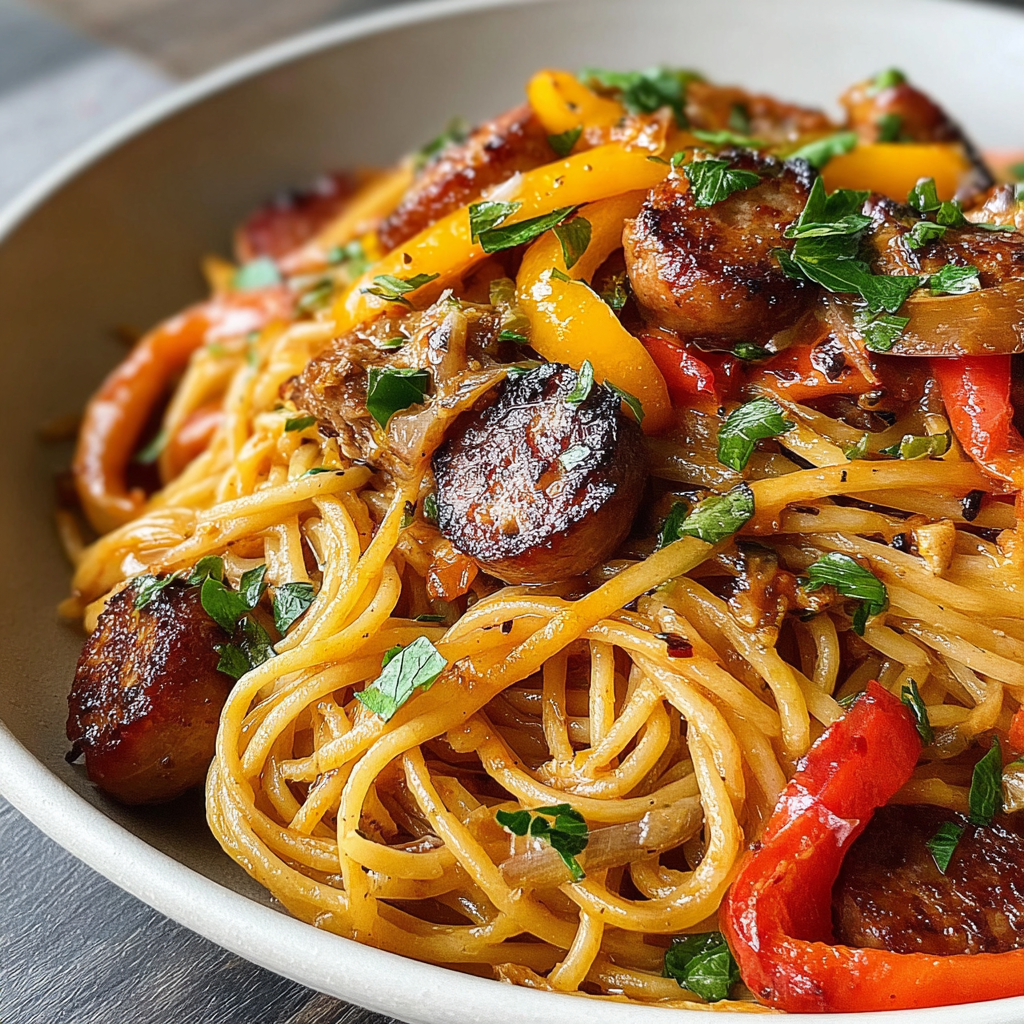
Spaghetti with sausage and peppers is a classic dish that perfectly combines hearty flavors with vibrant ingredients. The sweetness of bell peppers complements the savory depth of sausage, creating a meal that’s comforting yet exciting.
Whether you’re cooking for family or hosting friends, this dish is an easy yet impressive option. It's not only satisfying but also allows for some customization, making it a versatile addition to your recipe repertoire.
Ingredients
- 12 ounces spaghetti
The base of the dish, spaghetti provides the perfect canvas for the rich and flavorful sausage and peppers. Its shape allows it to hold onto the sauce, ensuring every bite is delicious. - 1 pound Italian sausage
Choosing Italian sausage adds robust flavor and a bit of spice to the dish. The fat rendered during cooking ensures a delicious sauce that clings to the pasta. - 1 tablespoon olive oil
Olive oil is used for sautéing the vegetables. It adds a subtle richness and helps in releasing flavors, creating a fragrant base for the dish. - 1 medium onion, sliced
Onions provide a sweet and savory flavor when cooked, contributing to the overall depth of the sauce. They also add texture and balance to the dish. - 2 bell peppers (red and yellow), sliced
Bell peppers add a sweet and slightly tangy flavor, as well as vibrant color. Their crunchiness also provides a pleasant contrast to the soft pasta. - 3 cloves garlic, minced
Garlic infuses the dish with aromatic flavors, enhancing the overall taste. It’s a key ingredient that elevates the dish and is packed with health benefits. - 1 teaspoon red pepper flakes
Red pepper flakes introduce a hint of heat. Adjusting the quantity allows you to customize the spice level according to your preference. - 1 can (14.5 ounces) diced tomatoes
Canned tomatoes form the base of the sauce, bringing acidity and a juicy texture that melds beautifully with the sausage and peppers. - Salt and pepper, to taste
Seasoning is crucial for elevating the flavors in this dish. Properly seasoning at each stage of cooking builds complexity in the final result. - Fresh basil, for garnish
Basil adds a fresh, herbal note that brightens the dish just before serving. It enhances both the aroma and flavor profile, providing a delightful finish.
Directions & Preparation
Step 1: Cook the spaghetti according to the package instructions until al dente.
Cooking the spaghetti to al dente ensures it holds its shape and texture when combined with the sauce. Remember to reserve a cup of pasta water; this starchy liquid can help adjust the sauce's consistency later.
Step 2: While the pasta cooks, heat olive oil in a large skillet over medium heat.
Heating the oil first before adding ingredients ensures even cooking and prevents sticking. Use a suitable skillet to accommodate all the sausage and vegetables without overcrowding.
Step 3: Remove the sausage from its casing and add it to the skillet, breaking it up into pieces as it cooks.
Cooking the sausage this way allows it to brown properly, developing a rich flavor through the Maillard reaction. Breaking it into smaller pieces ensures even cooking and mixing with the other ingredients.
Step 4: Once the sausage is browned, add the sliced onion and bell peppers to the skillet.
Adding the vegetables after the sausage develops a nice browning adds layer to the dish. Let the vegetables soften for a few minutes to enhance their sweetness and flavor before moving on.
Step 5: Stir in the minced garlic and red pepper flakes; cook for an additional minute until fragrant.
Garlic can burn quickly, so it’s important to add it after the vegetables have softened. Cooking it just until fragrant allows the robust flavor to infuse without turning bitter.
Step 6: Pour in the diced tomatoes, and season with salt and pepper. Allow the mixture to simmer for about 10 minutes.
The tomatoes add moisture and acidity, balancing the richness of the sausage. Simmering melds the flavors, deepening the overall taste while allowing the sauce to thicken.
Step 7: Once the pasta is cooked, drain and add it directly to the skillet with the sausage and pepper sauce.
Combining the pasta with the sauce directly in the skillet ensures that each strand of spaghetti is coated in the rich sauce. Use tongs to toss everything together, making sure flavors are evenly distributed.
Step 8: If the sauce is too thick, add reserved pasta water a little at a time until desired consistency is achieved.
Pasta water is starchy and helps bind the sauce to the pasta. Adjusting the consistency at this stage ensures a cohesive dish that clings to the spaghetti.
Step 9: Serve hot, garnished with fresh basil leaves.
Serving the dish hot allows the flavors to shine and offers a delightful aroma. Fresh basil as a garnish adds a burst of color and a fragrant finish that complements the meal.

Choosing the Right Sausage for Flavor Explosion
When selecting sausage for this dish, consider the type of flavor profile you desire. Spicy Italian sausage tends to provide a kick, while sweet Italian sausage offers a milder taste. Mixing different types can also yield a complexity that enhances the overall dish.
The Role of Bell Peppers in Creating Texture and Color
Bell peppers not only contribute to the flavor but also present texture and visual appeal. By using a combination of red and yellow peppers, you not only elevate the dish aesthetically but also bring a spectrum of sweetness that balances with the savory notes from the sausage.
Mastering the Sauce for Perfectly Coated Pasta
The sauce is crucial for a successful spaghetti dish. It should be rich enough to coat the spaghetti without being overly thick. Simmering the sauce for a proper duration will ensure all the flavors meld together, creating a harmonious blend that's essential for a satisfying meal.
FAQs
Can I use turkey sausage instead of pork sausage?
Yes, turkey sausage is a leaner alternative and can be used effectively in this recipe, though it may lack some of the rich flavor.
What if the sauce is too bland?
If the sauce tastes bland, try adding more salt or a splash of red wine vinegar for acidity. Fresh herbs at the end also add brightness.
Can I add other vegetables to my sauce?
Certainly! Zucchini, mushrooms, or spinach can enhance nutrition and bring additional flavors. Just sauté them alongside the other vegetables.
What should I do if the sauce is too thick?
If the sauce is too thick, gradually add reserved pasta water to reach your desired consistency, stirring until well combined.
How can I elevate the flavor further?
Consider adding grated Parmesan cheese at the end or a dash of balsamic vinegar for extra depth and a sophisticated finish.
Is this recipe suitable for leftovers?
Yes, this dish holds up well as leftovers and the flavors can deepen after a day in the fridge, making it even more enjoyable.
Conclusion
Making spaghetti with sausage and peppers is an excellent way to deliver bold flavors and satisfying textures in one dish. Its adaptability allows for experimentation with different ingredients, ensuring it can be customized to suit your tastes.
This dish is perfect for family dinners, casual gatherings, or even meal-prepping for the week. Everybody will love the comforting combination of pasta, sausage, and vibrant vegetables, making it a recurring favorite in your kitchen.
Recipe Card
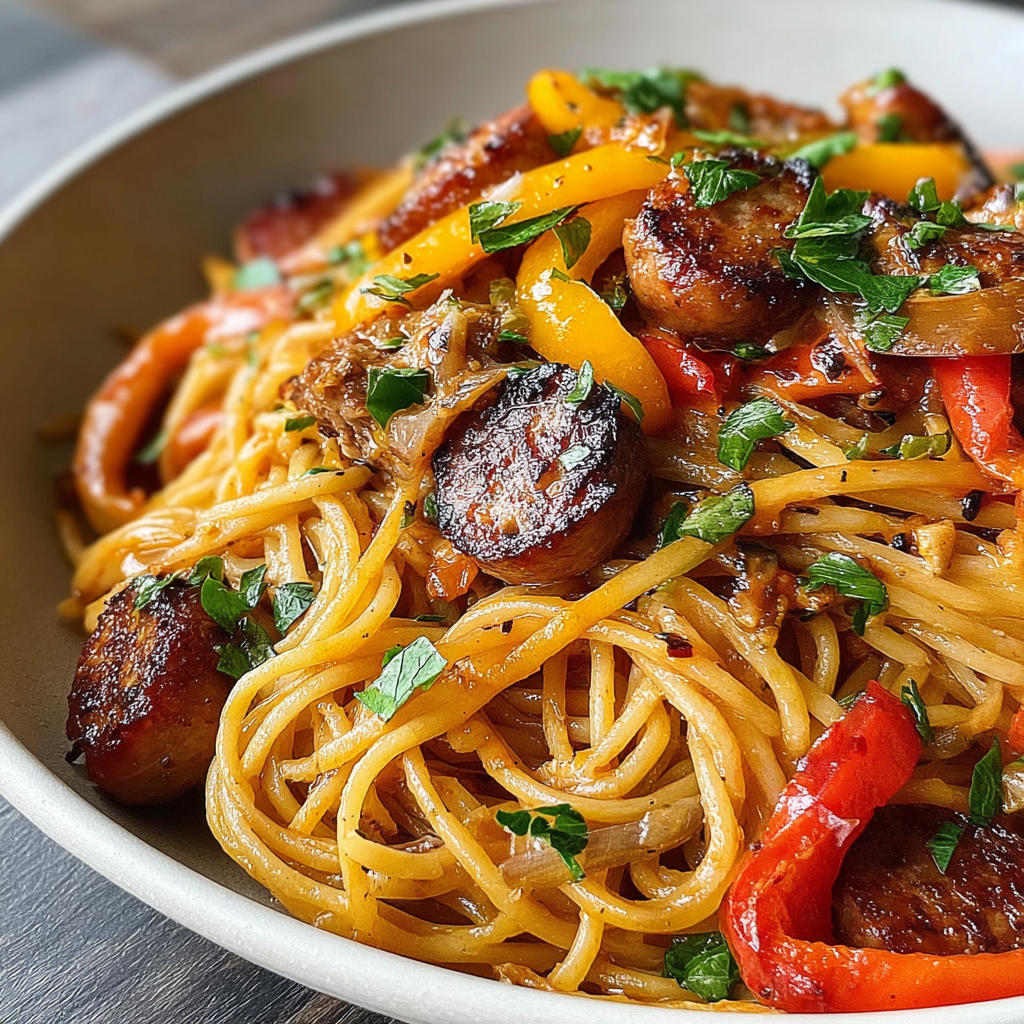
Savoring Spaghetti with Sausage and Peppers
Ingredients
Method
- Cook the spaghetti according to the package instructions until al dente.
- While the pasta cooks, heat olive oil in a large skillet over medium heat.
- Remove the sausage from its casing and add it to the skillet, breaking it up into pieces as it cooks.
- Once the sausage is browned, add the sliced onion and bell peppers to the skillet.
- Stir in the minced garlic and red pepper flakes; cook for an additional minute until fragrant.
- Pour in the diced tomatoes, and season with salt and pepper. Allow the mixture to simmer for about 10 minutes.
- Once the pasta is cooked, drain and add it directly to the skillet with the sausage and pepper sauce.
- If the sauce is too thick, add reserved pasta water a little at a time until desired consistency is achieved.
- Serve hot, garnished with fresh basil leaves.
Notes
Additional serving suggestions: pair with a crisp salad, garlic bread, or roasted seasonal vegetables for balance.
For make-ahead, prep components separately and assemble just before heating to preserve texture.
Taste and adjust with acid (lemon/vinegar) and salt right at the end to wake up flavors.