Introduction
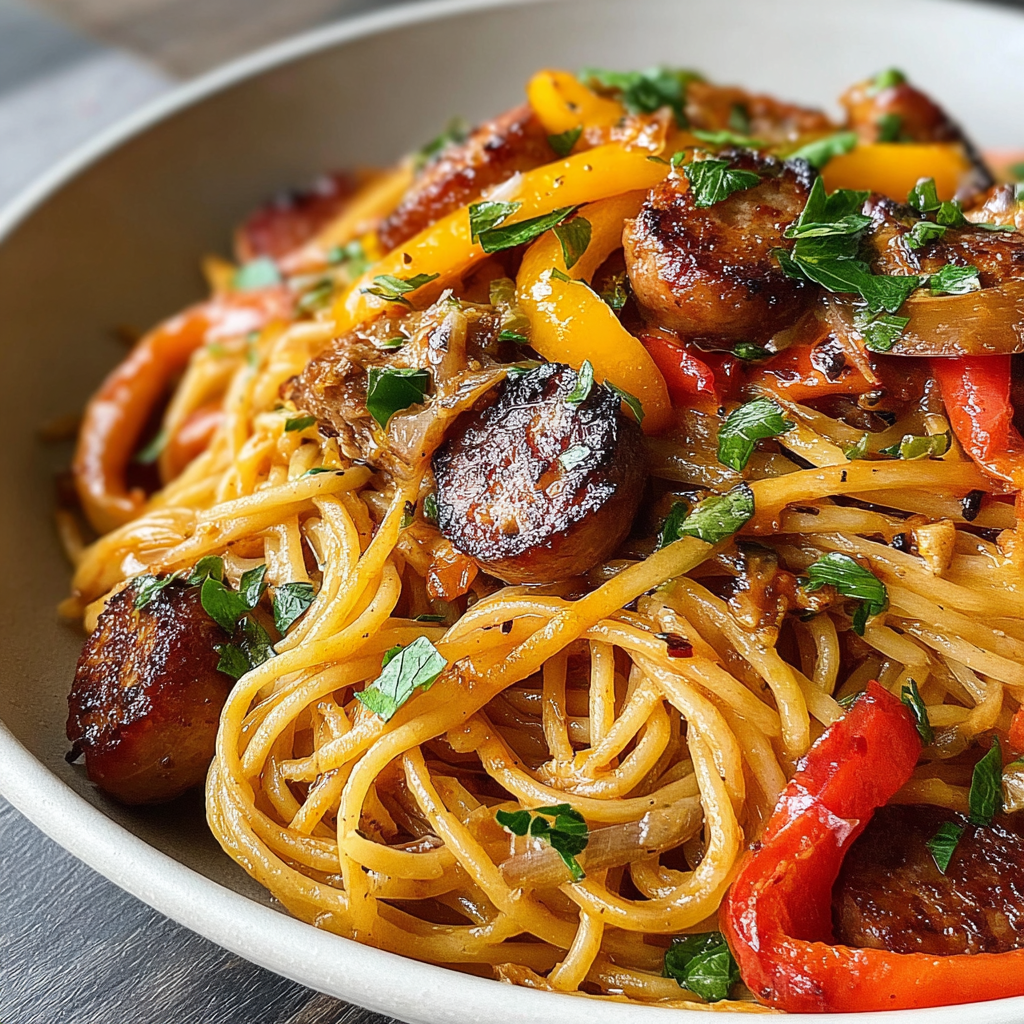
Spaghetti with sausage and peppers is a classic dish that balances savory flavors with a touch of zest. This beloved recipe brings together Italian sausage and colorful bell peppers, creating a vibrant and satisfying meal any home cook can master.
The combination of sautéed sausage, sautéed vegetables, and perfectly cooked spaghetti creates a comforting dish that's perfect for weeknight dinners or casual gatherings. It's not just about feeding your hunger; it's about creating an experience filled with rich aromas and appealing textures.
Whether you prefer sweet or spicy sausage, the choice is yours, and the peppers add a sweet crunch that complements the dish beautifully. With just a few good ingredients, this recipe can easily become one of your family favorites.
Ingredients
- 12 ounces spaghetti
Spaghetti serves as the base for the dish, offering a hearty and filling component. When cooked al dente, it provides the perfect texture to hold the sauce. - 1 pound Italian sausage, casings removed
Sausage adds a rich, meaty flavor and contributes a satisfying depth to the dish. Depending on the type of sausage, you can tailor the spice level to your preference. - 2 tablespoons olive oil
Olive oil is crucial for sautéing the vegetables and sausage, enhancing flavor while preventing sticking. It also adds healthy fats to the dish. - 1 medium onion, thinly sliced
Onions add a natural sweetness and depth that pairs beautifully with the sausage. They cook down to become soft, infusing the oil with flavor. - 2 bell peppers (red and yellow), sliced
Bell peppers introduce color and a crisp texture. They contribute sweetness and a slight crunch that contrasts nicely with the soft ingredients. - 2 cloves garlic, minced
Garlic brings a pungent aroma and flavor that elevates the dish. When sautéed, it softens and complements the sausage and vegetables. - 1 teaspoon dried oregano
Oregano lends an Italian herbaceous note, enhancing the overall flavor profile. It pairs well with the savory sausage. - 1/2 teaspoon red pepper flakes
Red pepper flakes add a kick to the dish, giving it a bit of heat that can be adjusted to your taste. - 1 can (14.5 ounces) diced tomatoes
Diced tomatoes offer juiciness and acidity, creating a luscious sauce that clings to the spaghetti while providing a fresh brightness. - Salt and pepper to taste
Seasoning is essential to bring out the flavors of all ingredients. It's important to adjust these to suit your palate. - Grated Parmesan cheese, for serving
Parmesan adds a salty, nutty finish to the dish, rounding out the flavors and providing a lovely creamy touch when mixed in.
Directions & Preparation
Step 1: Cook the spaghetti according to package instructions until al dente, then drain and set aside.
Cooking the spaghetti al dente is crucial as it will continue to cook slightly when combined with the sausage and sauce. Always reserve a little pasta water in case you need to adjust the sauce's consistency later.
Step 2: In a large skillet, heat the olive oil over medium heat.
Heating the oil before adding other ingredients ensures a proper sauté. It should shimmer slightly but not smoke, indicating that it’s hot enough to start cooking.
Step 3: Add the sliced onions and bell peppers to the skillet, sauté for about 5-7 minutes until softened.
Sautéing the onions and peppers allows them to caramelize slightly, enhancing their natural sweetness and building a flavor base that will permeate the dish.
Step 4: Stir in the minced garlic, oregano, and red pepper flakes, cooking until fragrant, about 1 minute.
Adding garlic and herbs at this point ensures that their flavors are released into the oil without burning, which can lead to bitterness.
Step 5: Increase heat to medium-high and add the sausage, breaking it apart with a spatula. Cook until browned and fully cooked, about 8-10 minutes.
Browning the sausage not only develops its flavor through caramelization but also adds texture. Be sure to cook it thoroughly to avoid any risk of undercooked meat.
Step 6: Pour in the diced tomatoes and stir to combine. Allow to simmer for 5 minutes to blend flavors and thicken slightly.
Simmering the mixture enables the ingredients to meld, and the acidity from the tomatoes helps to balance the richness of the sausage.
Step 7: Combine the cooked spaghetti with the sausage and pepper mixture in the skillet, tossing gently to coat.
Tossing the spaghetti in the skillet helps to incorporate all the flavors evenly. If the mixture seems too dry, add a bit of reserved pasta water to loosen it up.
Step 8: Season with salt and pepper to taste before serving, and garnish with grated Parmesan cheese.
Adjusting the seasoning at this step is vital to enhance the dish’s overall flavor. The cheese will add a nice, creamy finish that complements the dish beautifully.

Choosing the Right Sausage
The type of sausage you choose can dramatically change the flavor of your spaghetti. Sweet Italian sausage offers a mellow taste, while spicy varieties add heat. Mixing the two can give you a delightful contrast, enhancing the overall dish. Experiment with different brands or even homemade sausages for a taste that suits your palate.
Getting the Vegetables Just Right
Properly sautéing the vegetables plays a significant role in developing the dish's overall flavor. The goal is to soften the onions and peppers without losing their vibrant color or crunch. Keeping a close eye during cooking ensures they contribute not just to taste but also to the dish's visual appeal.
Perfect Pasta Pairing Techniques
When combining spaghetti with the sauce, it's essential to consider texture and balance. Tossing the pasta in the sauce allows it to absorb flavors, creating a cohesive dish. If you find the sauce too thick, using reserved pasta water can help achieve the desired consistency without watering down the taste.
FAQs
What can I do if my sauce is too thick?
If the sauce is too thick, gradually add reserved pasta water, a tablespoon at a time, until you reach your desired consistency.
How can I make my dish less bland?
Taste the dish before serving and adjust the seasoning with salt, pepper, and perhaps a bit more red pepper flakes for heat.
What type of sausage should I use for this recipe?
You can use sweet Italian sausage for a milder flavor or hot sausage for added spice. Feel free to mix the two for balance.
Can I add more vegetables to this dish?
Absolutely! Zucchini, mushrooms, or even spinach can be great additions to incorporate more nutrients and flavors.
What if I don’t have fresh garlic?
If you don’t have fresh garlic, you can substitute with 1/4 teaspoon of garlic powder for similar flavor, but be cautious with the amount.
Is it possible to scale this recipe for a larger group?
Yes, simply multiply the ingredients by the number of servings you need. Just ensure your cooking vessel can accommodate the extra volume.
Conclusion
Spaghetti with sausage and peppers is more than just a meal; it's a comforting dish perfect for any occasion. With versatile ingredients and straightforward preparation, it easily adapts to personal tastes and preferences.
Embrace the opportunity to explore different sausage and vegetable combinations, making this dish uniquely yours. Gather your loved ones around the table and enjoy the hearty flavors and delightful aromas of this classic Italian favorite.
Recipe Card
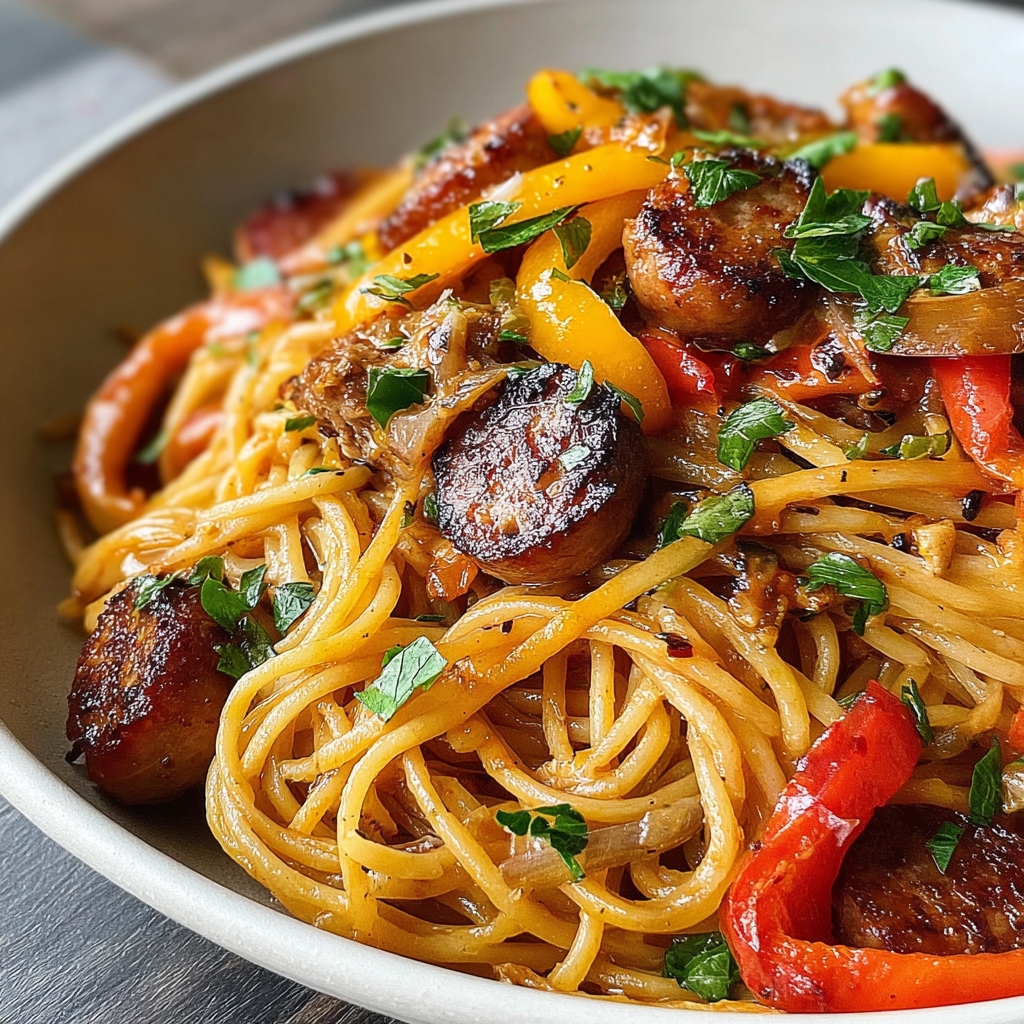
Savoring Spaghetti with Sausage and Peppers
Ingredients
Method
- Cook the spaghetti according to package instructions until al dente, then drain and set aside.
- In a large skillet, heat the olive oil over medium heat.
- Add the sliced onions and bell peppers to the skillet, sauté for about 5-7 minutes until softened.
- Stir in the minced garlic, oregano, and red pepper flakes, cooking until fragrant, about 1 minute.
- Increase heat to medium-high and add the sausage, breaking it apart with a spatula. Cook until browned and fully cooked, about 8-10 minutes.
- Pour in the diced tomatoes and stir to combine. Allow to simmer for 5 minutes to blend flavors and thicken slightly.
- Combine the cooked spaghetti with the sausage and pepper mixture in the skillet, tossing gently to coat.
- Season with salt and pepper to taste before serving, and garnish with grated Parmesan cheese.
Notes
Additional serving suggestions: pair with a crisp salad, garlic bread, or roasted seasonal vegetables for balance.
For make-ahead, prep components separately and assemble just before heating to preserve texture.
Taste and adjust with acid (lemon/vinegar) and salt right at the end to wake up flavors.