Introduction
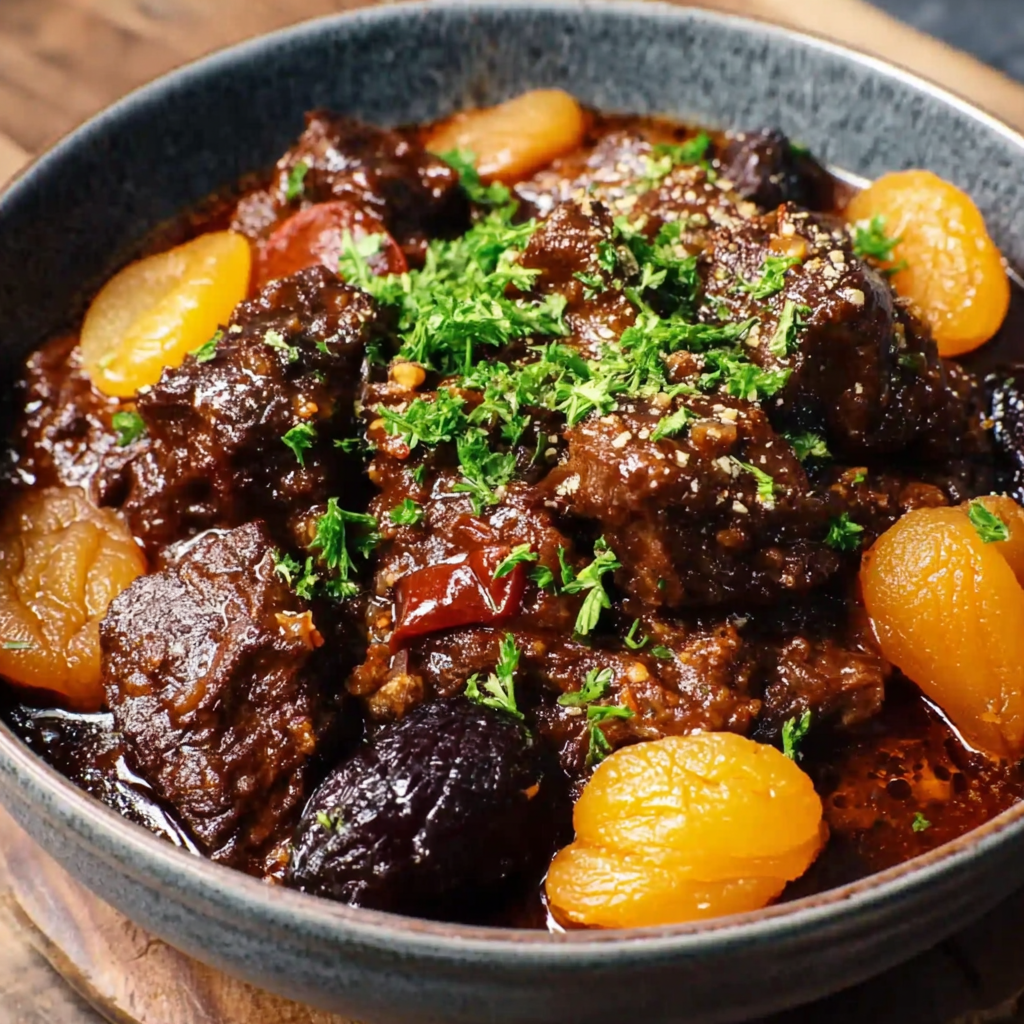
Moroccan Beef Stew with Apricots is a delightful fusion of savory and sweet flavors, showcasing the rich culinary traditions of North Africa. Beef is transformed into a tender, aromatic dish that's perfect for cozy gatherings or a comforting family meal.
The addition of apricots not only enhances the stew's sweetness but also introduces a unique texture that perfectly contrasts the hearty beef. With warming spices like cumin and cinnamon, this dish is a fragrant journey for your taste buds, making it a memorable centerpiece for any dinner.
Ingredients
- 2 pounds beef chuck, cut into 1-inch pieces
Beef chuck is ideal for stews due to its marbled fat, which breaks down during cooking, resulting in tender, flavorful meat. - 1 large onion, chopped
Onions form the aromatic base in the stew, adding sweetness and depth as they caramelize. - 3 cloves garlic, minced
Garlic brings a pungent flavor that complements the richness of the beef, giving the stew a robust character. - 2 cups beef broth
Broth is essential for creating a flavorful liquid base, infusing richness into every bite and ensuring the beef remains moist. - 1 cup diced apricots (dried or fresh)
Apricots add a subtle sweetness that balances the savory flavors of the spices and the beef, enhancing the dish's complexity. - 2 tablespoons olive oil
Olive oil is used for browning the beef and sautéing ingredients, contributing to the overall flavor and mouthfeel of the stew. - 2 teaspoons ground cumin
Cumin brings warmth and earthiness, grounding the dish in traditional Moroccan flavors, enhancing its savory profile. - 1 teaspoon ground cinnamon
Cinnamon adds a sweet-spicy note that is foundational to Moroccan cuisine, giving the stew its distinctive taste. - 1 teaspoon ground ginger
Ground ginger contributes a gentle warmth and complexity, brightening the overall flavor profile. - Salt and pepper, to taste
Seasoning ensures the dish is properly flavored, allowing each ingredient's qualities to shine. - Fresh cilantro or parsley, for garnish
Herbs provide a fresh, bright contrast to the rich stew and add a visual appeal to the final dish.
Directions & Preparation
Step 1: In a large pot, heat the olive oil over medium-high heat.
Heating the oil properly is crucial as it allows the beef to sear and develop a deep brown crust, enhancing flavor through the Maillard reaction.
Step 2: Add the beef chunks in batches, browning on all sides.
Browning the beef prevents steaming and ensures a rich flavor, creating a caramelized layer that deepens the stew's overall taste.
Step 3: Remove the beef from the pot and set it aside.
Once the beef is browned, it should be removed to avoid overcooking while the vegetables are sautéed, preserving the meat's tenderness.
Step 4: In the same pot, add the chopped onion and garlic, sautéing until softened.
Sautéing onions and garlic creates a flavorful base for the stew; they need to soften and become fragrant to build the flavors of the dish.
Step 5: Stir in the cumin, cinnamon, and ginger, cooking for another minute.
Cooking the spices releases their essential oils, intensifying their flavors and preparing them to infuse the stew.
Step 6: Return the browned beef to the pot and sprinkle with salt and pepper.
Adding the beef back allows it to absorb the flavors from the sautéed onions and spices, ensuring a well-seasoned dish.
Step 7: Pour in the beef broth, scraping any bits from the bottom.
Deglazing the pot captures the flavorful bits stuck to the bottom, enriching the broth with added layers of flavor.
Step 8: Add the diced apricots and bring the mixture to a boil.
By including apricots at this stage, they have time to soften and infuse their sweetness into the stew, contrasting with the savory beef.
Step 9: Reduce the heat to low, cover, and simmer for about 1.5 to 2 hours.
Slow cooking is key; it allows the flavors to meld beautifully while the beef becomes tender and succulent.
Step 10: Check the stew periodically, stirring, and add more broth if too thick.
Regularly checking ensures that the stew doesn’t dry out or scorch, allowing you to achieve the desired consistency.
Step 11: When the beef is tender, adjust seasonings and garnish with fresh herbs before serving.
Final seasoning adjustments ensure the optimal flavor profile, and garnishing with herbs adds freshness, enhancing the overall appeal.

Balancing Sweetness and Savory Depth
The interplay of sweet apricots and savory beef embodies Moroccan culinary traditions. The choice of spices is crucial; they not only add warmth but also enhance the sweetness of the apricots. If using fresh apricots, consider adding a splash of honey or brown sugar to underscore their natural flavors without overwhelming the dish.
The Importance of Browning Meat
Browning the beef is a non-negotiable step as it develops a complex depth of flavor. This process creates a rich crust that, when cooked down with the other ingredients, enriches the overall taste of the stew. Do not rush this step; allow each piece to achieve a golden color before removing it from the pot.
Making Adjustments to Suit Your Palate
This stew excels because it allows for flexibility. Feel free to adjust spices based on personal preference—add heat with chili flakes or enhance earthiness with smoked paprika. These customizations help tailor the dish to your taste while maintaining its Moroccan essence.
FAQs
What can I do if the stew is too thick?
If the stew becomes too thick during cooking, gradually add more beef broth or water to achieve your desired consistency, stirring well.
How can I enhance the depth of flavor?
Increasing the amount of spices or adding a splash of red wine during the simmering phase can enhance flavor complexity.
Can I use a different fruit instead of apricots?
Yes, dried prunes or figs would be excellent substitutes, adding a different sweetness and texture to the stew.
What should I do if my stew turns out bland?
Taste and adjust with more salt, pepper, or spices; adding a splash of vinegar can also heighten the dish's flavors.
Is it necessary to let the stew rest after cooking?
Allowing the stew to rest for about 30 minutes after cooking can help the flavors meld together more effectively.
Can I substitute the beef with lamb?
Yes, lamb is a wonderful alternative, bringing a distinct flavor profile that pairs beautifully with the spices used.
Conclusion
Moroccan Beef Stew with Apricots is more than just a meal; it's an experience that reflects the warmth of home cooking. With its vibrant flavors and inviting aroma, it's sure to impress family and friends alike.
Take your time with this dish, savoring each step of the process, and you'll be rewarded with a comforting bowl of stew that celebrates the rich, aromatic cuisine of Morocco.
Recipe Card
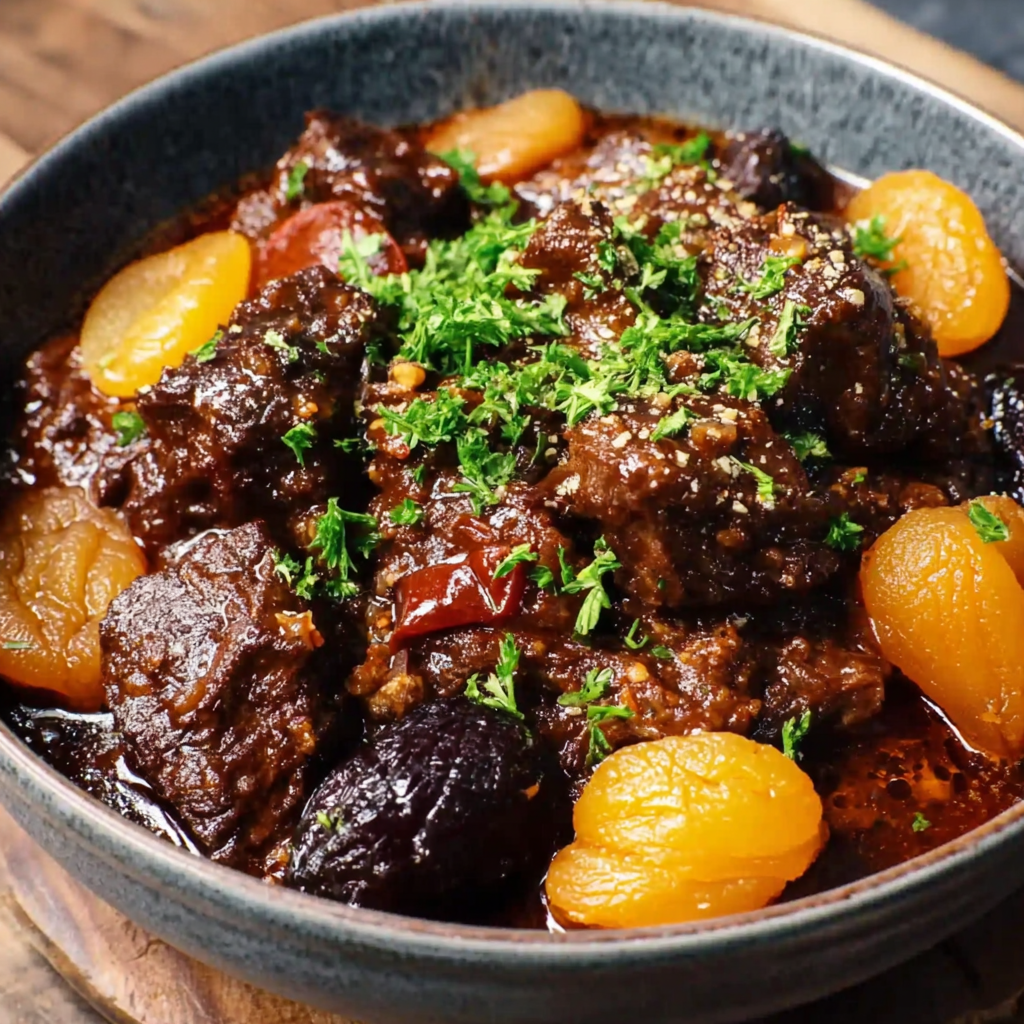
Warm and Flavorful Moroccan Beef Stew with Apricots
Ingredients
Method
- In a large pot, heat the olive oil over medium-high heat.
- Add the beef chunks in batches, browning on all sides.
- Remove the beef from the pot and set it aside.
- In the same pot, add the chopped onion and garlic, sautéing until softened.
- Stir in the cumin, cinnamon, and ginger, cooking for another minute.
- Return the browned beef to the pot and sprinkle with salt and pepper.
- Pour in the beef broth, scraping any bits from the bottom.
- Add the diced apricots and bring the mixture to a boil.
- Reduce the heat to low, cover, and simmer for about 1.5 to 2 hours.
- Check the stew periodically, stirring, and add more broth if too thick.
- When the beef is tender, adjust seasonings and garnish with fresh herbs before serving.
Notes
Additional serving suggestions: pair with a crisp salad, garlic bread, or roasted seasonal vegetables for balance.
For make-ahead, prep components separately and assemble just before heating to preserve texture.
Taste and adjust with acid (lemon/vinegar) and salt right at the end to wake up flavors.