Introduction
A sausage and veggie skillet is a delightful way to combine hearty flavors with vibrant vegetables, creating a dish that not only looks good but tastes fantastic. The balance between the savory sausage and fresh, seasonal veggies allows for a nutritious and filling meal any time of day.
This one-pan dish is versatile and can be adjusted based on what you have available in your fridge. It's perfect for busy weeknights or leisurely weekends, as it comes together quickly and with minimal cleanup—just a skillet to wash at the end!
Whipping up a sausage and veggie skillet not only satisfies your taste buds but also adds a splash of color to your plate. Whether you choose spicy Italian sausage, sweet bratwurst, or a vegetarian alternative, the outcome is always a comforting, soul-satisfying meal.
Ingredients
- 1 lb sausage (Italian or bratwurst)
The sausage acts as the star of the dish, providing rich flavors and essential fats that enhance the overall indulgence of the meal. Choosing a high-quality, flavorful sausage sets the foundation for a satisfying taste experience. - 2 cups bell peppers (mixed colors)
Bell peppers add a crunchy texture and a splash of color to your skillet. They bring sweetness and freshness to balance the savory elements of the sausage, and their bright hues make the meal visually appealing. - 1 medium onion, sliced
Onions contribute a savory depth to the dish as they caramelize during cooking. Their natural sweetness enhances the overall flavor profile, and they add aromatic qualities that make the dish enticing. - 2 cloves garlic, minced
Garlic infuses the skillet with a mouthwatering aroma and adds a robust flavor. Its presence uplifts the dish and complements the sausage, while also providing health benefits. - 2 zucchinis, sliced
Zucchini acts as a mild, tender addition that soaks up flavors while adding moisture. It cooks quickly in the skillet, contributing to the overall texture and making the dish lighter. - 1 teaspoon Italian seasoning
Italian seasoning brings an essential herbal depth, combining flavors of oregano, basil, and thyme. It enhances the dish’s authentic Italian vibe, harmonizing beautifully with the sausage. - Salt and pepper to taste
Seasoning is crucial for balancing the flavors in your dish. Salt enhances the overall taste, while pepper provides a subtle heat, allowing each ingredient to shine. - 2 tablespoons olive oil
Olive oil is the cooking fat that allows ingredients to sauté effectively, developing their flavors. It also contributes a buttery richness, enhancing the skillet's overall taste.
Directions & Preparation
Step 1: Heat olive oil in a large skillet over medium heat.
Heating the olive oil is the first crucial step as it ensures that the sausage can sear properly. This creates a golden crust, which not only enhances the flavors but also locks in moisture. Make sure the oil shimmers before adding other ingredients, indicating it’s hot enough for sautéing.
Step 2: Add the sausage, breaking it apart with a spatula as it browns.
Cooking the sausage until it is nicely browned is essential for developing a rich, savory flavor. Breaking it apart allows for even cooking and better integration of the sausage into the veggie mix, ensuring every bite is flavorful. Cook until no pink remains, about 5-7 minutes.
Step 3: Stir in the sliced onions and bell peppers, cooking until tender.
Adding the onions and bell peppers at this point not only builds flavor complexity but also adds sweetness as the veggies soften. It’s important to stir frequently and cook until they become tender yet still vibrant—about 5 minutes. This ensures they maintain a slight crunch while mingling their flavors with the sausage.
Step 4: Incorporate the minced garlic and sauté for one minute.
Garlic cooks quickly, so it’s added last to prevent burning. Sautéing it just until fragrant—about one minute—allows its flavors to bloom without becoming bitter, enhancing the aroma of the skillet as all the ingredients meld together.
Step 5: Add the sliced zucchini and Italian seasoning to the skillet.
Zucchini can quickly turn mushy, so it’s added after the other veggies to ensure it remains slightly crisp. The Italian seasoning adds depth, enveloping everything in aromatic goodness. Stir well and cook for an additional 4-5 minutes, or until the zucchini is tender but not overcooked.
Step 6: Season with salt and pepper to taste.
By seasoning at the end, you can better gauge the flavor balance of the whole dish, adjusting it according to personal preference. This final step is crucial for bringing all flavors to the forefront and ensuring your dish is well-rounded and satisfying.
Step 7: Serve hot and enjoy your delicious creation.
Serving the skillet hot allows the flavors to shine and the aroma to waft through the air. This dish can stand alone or be paired with your favorite sides like crusty bread or a light salad, making it a versatile choice for any meal.

Embracing Seasonal Veggies
Using seasonal vegetables in your sausage and veggie skillet not only enhances flavors but also encourages creativity in cooking. Seasonal produce is often fresher and more flavorful, elevating the overall dish. Feel free to experiment with what you have on hand—carrots, asparagus, or even spinach can add new dimensions.
Choosing the Right Sausage
The type of sausage you choose can dramatically change the flavor of your skillet. Spicy Italian sausage lends a punch, while milder bratwurst allows the veggies to take center stage. Consider culinary preferences and dietary needs when selecting, and don’t hesitate to mix and match different sausages for a unique experience.
Perfecting Your Cooking Technique
Searing the sausage first is paramount for flavor depth, yet can sometimes be overlooked. This technique allows for the Maillard reaction to occur, creating a complex flavor profile. Don’t rush this step; it's crucial for achieving a golden exterior and juicy interior, setting the stage for the entire dish.
FAQs
What should I do if the vegetables are overcooked?
If the vegetables become mushy, consider reducing cook time the next time. Adding them in stages, based on cooking time, can also help achieve the desired texture.
Can I use turkey sausage instead of pork?
Absolutely! Turkey sausage is a great leaner alternative and will work well in this skillet while still providing flavor.
What if I don’t have zoodles?
If zucchini isn’t available, feel free to substitute any quick-cooking veggie like summer squash or even shredded carrots.
How can I add more spice to the dish?
For added heat, try incorporating red pepper flakes or a splash of hot sauce during cooking. Adjust to your spice preference for a flavorful kick.
Is there a recommended cooking time for different sausages?
Different sausages have varying fat contents, but generally, they should be browned for about 5-7 minutes on medium heat until no longer pink.
What if my skillet gets too dry during cooking?
If your skillet appears dry, adding a splash of chicken broth or water can help deglaze the pan and prevent sticking, enhancing flavor and maintaining moisture.
Conclusion
In summary, a sausage and veggie skillet is an incredibly versatile dish that encourages personalization and creativity. It allows you to make use of seasonal ingredients while providing a satisfying and healthy option for any meal.
With just a few ingredients and minimal fuss, you can create a vibrant dish that’s not only nourishing but also bursting with flavor. Gather your favorite sausage and veggies, and enjoy the process of bringing this delightful skillet to your table.
Recipe Card
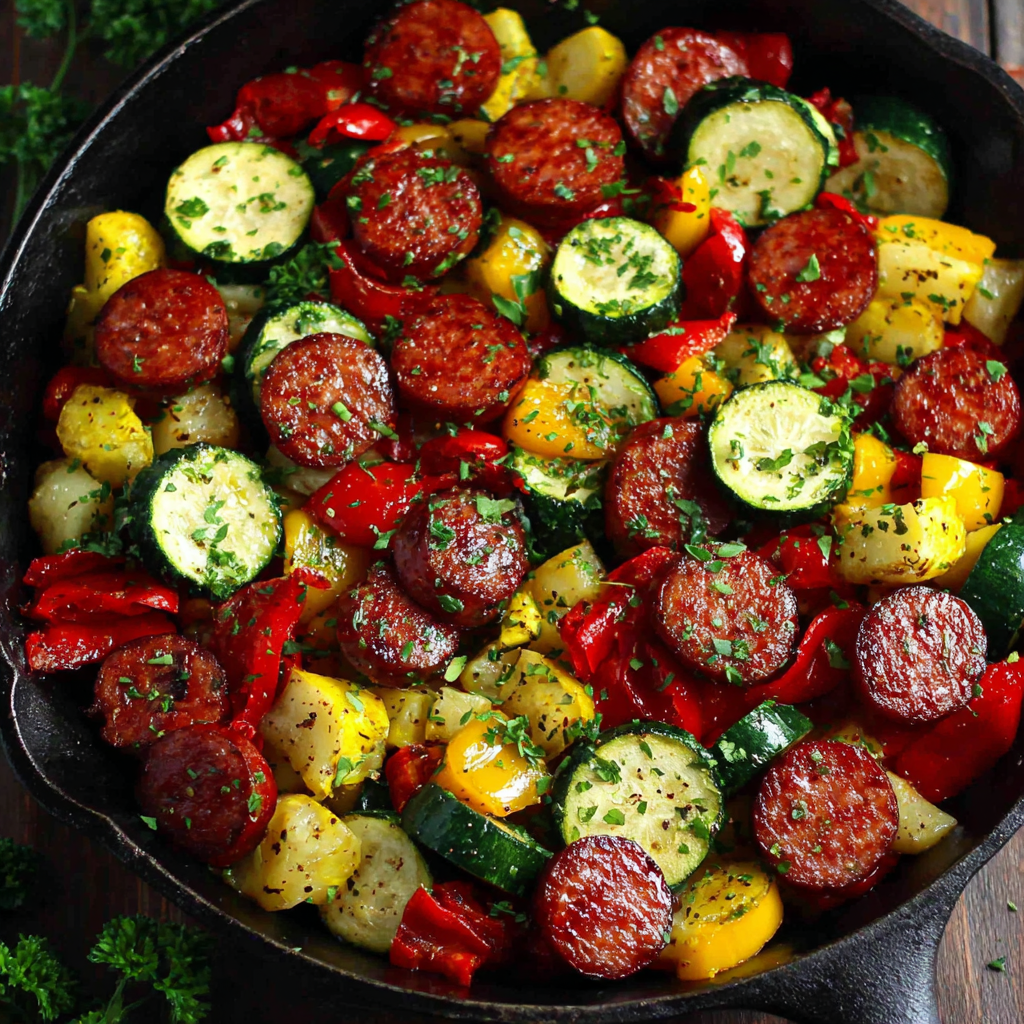
Colorful Sausage and Veggie Skillet for Any Meal
Ingredients
Method
- Heat olive oil in a large skillet over medium heat.
- Add the sausage, breaking it apart with a spatula as it browns.
- Stir in the sliced onions and bell peppers, cooking until tender.
- Incorporate the minced garlic and sauté for one minute.
- Add the sliced zucchini and Italian seasoning to the skillet.
- Season with salt and pepper to taste.
- Serve hot and enjoy your delicious creation.
Notes
Additional serving suggestions: pair with a crisp salad, garlic bread, or roasted seasonal vegetables for balance.
For make-ahead, prep components separately and assemble just before heating to preserve texture.
Taste and adjust with acid (lemon/vinegar) and salt right at the end to wake up flavors.