Introduction
The holiday season brings joy, warmth, and a chance to impress loved ones with a special meal. Among the many festive options, stuffed beef tenderloin stands out not just for its flavor but for the visual appeal it offers on the dining table. This dish combines rich beef with a savory stuffing that reflects the classic flavors of the season.
Preparing a stuffed beef tenderloin may sound daunting, but it can be surprisingly quick and straightforward, allowing you to serve a gourmet experience without spending hours in the kitchen. This recipe features a delightful stuffing made with seasonal ingredients that enhance the beef, making it a memorable centerpiece for your Christmas meal.
Ingredients
- 2 pounds beef tenderloin
Quality beef tenderloin is the star of the dish, known for its tenderness and rich flavor. When sourced from a reputable butcher, the beef's marbling ensures a juicy outcome. - 1 cup diced mushrooms
Mushrooms add an earthy depth to the stuffing, enhancing the umami aspect. They also provide moisture, preventing the stuffing from drying out during cooking. - 1 cup bread crumbs
Bread crumbs act as a binding agent for the stuffing, absorbing the juices and flavors. Opt for stale bread crumbs to avoid a soggy texture and achieve a more defined structure. - 1/4 cup fresh parsley, chopped
Fresh parsley not only adds a pop of color but also infuses freshness into the stuffing. Its mild flavor complements the richness of the beef without overwhelming it. - 2 cloves garlic, minced
Garlic is a fundamental aromatic in this dish, contributing depth and a savory note. Properly minced, it ensures even distribution of flavor throughout the stuffing. - 1/2 cup grated Parmesan cheese
Parmesan cheese adds a salty, nutty richness that enhances the overall flavor profile of the stuffing. It also helps in creating a cohesive mixture. - 1 tablespoon Dijon mustard
Dijon mustard contributes a tangy depth that cuts through the richness of the beef. It also helps in adhering the stuffing to the tenderloin. - Salt and pepper to taste
Seasoning is crucial for enhancing the natural flavors of all the ingredients. Adjusting salt and pepper ensures each component shines individually. - Olive oil for searing
Oiling the tenderloin before searing not only prevents sticking but also aids in developing a beautifully browned crust that locks in juices. - 2 teaspoons fresh thyme, chopped
Thyme complements the flavors of beef and adds a fragrant, herbal note. Fresh herbs bring a vibrancy that dried herbs can lack.
Directions & Preparation
Step 1: Preheat the oven to 400°F (200°C).
Preheating the oven is essential for creating an evenly cooked tenderloin. The high temperature will help in achieving a perfect sear on the meat while preventing it from drying out.
Step 2: Prepare the stuffing by heating olive oil in a skillet over medium heat. Add mushrooms, garlic, and thyme; sauté until mushrooms release moisture.
This step is key for bringing out the flavors of the mushrooms and garlic. Sautéing removes excess moisture, ensuring the stuffing remains firm and flavorful when baked.
Step 3: In a bowl, combine sautéed mushrooms, bread crumbs, parsley, Parmesan cheese, Dijon mustard, salt, and pepper.
Mixing these ingredients ensures a well-rounded flavor in your stuffing. The breadcrumbs absorb moisture and flavors, while the cheese adds richness, binding everything together.
Step 4: Prepare the beef tenderloin by trimming any excess fat, then use a sharp knife to cut a pocket into the side.
Creating a pocket for the stuffing is crucial for even cooking and flavor infusion. Proper trimming also reduces excess fat that could make the dish greasy.
Step 5: Stuff the beef tenderloin with the prepared mixture, pressing it in firmly, and secure with kitchen twine or toothpicks.
Packing the stuffing tightly prevents it from falling out during cooking. Securing the tenderloin also helps maintain its shape, ensuring even cooking.
Step 6: Season the outside of the tenderloin with salt and pepper, then heat olive oil in an oven-safe skillet over medium-high heat.
Seasoning the exterior enhances the crust's flavor while the skillet's heat aids in developing a caramelized surface, which adds additional depth to the dish.
Step 7: Sear the stuffed tenderloin on all sides until browned, about 3-4 minutes per side.
Searing locks in the juices and enhances flavor through the Maillard reaction, creating a flavorful crust. This step is important to achieve a tender, juicy center.
Step 8: Transfer the skillet to the preheated oven and roast for 20-25 minutes, or until a meat thermometer registers 130°F (54°C) for medium rare.
Roasting in the oven helps cook the beef evenly, allowing the flavors of the stuffing to meld with the meat. Monitoring the internal temperature ensures perfect doneness.
Step 9: Remove from the oven and let the beef rest for 10 minutes before slicing.
Resting is vital for redistributing the juices within the meat, preventing them from leaking out. This step helps in achieving tender, juicy slices when served.
Step 10: Slice the beef tenderloin, serve, and enjoy!
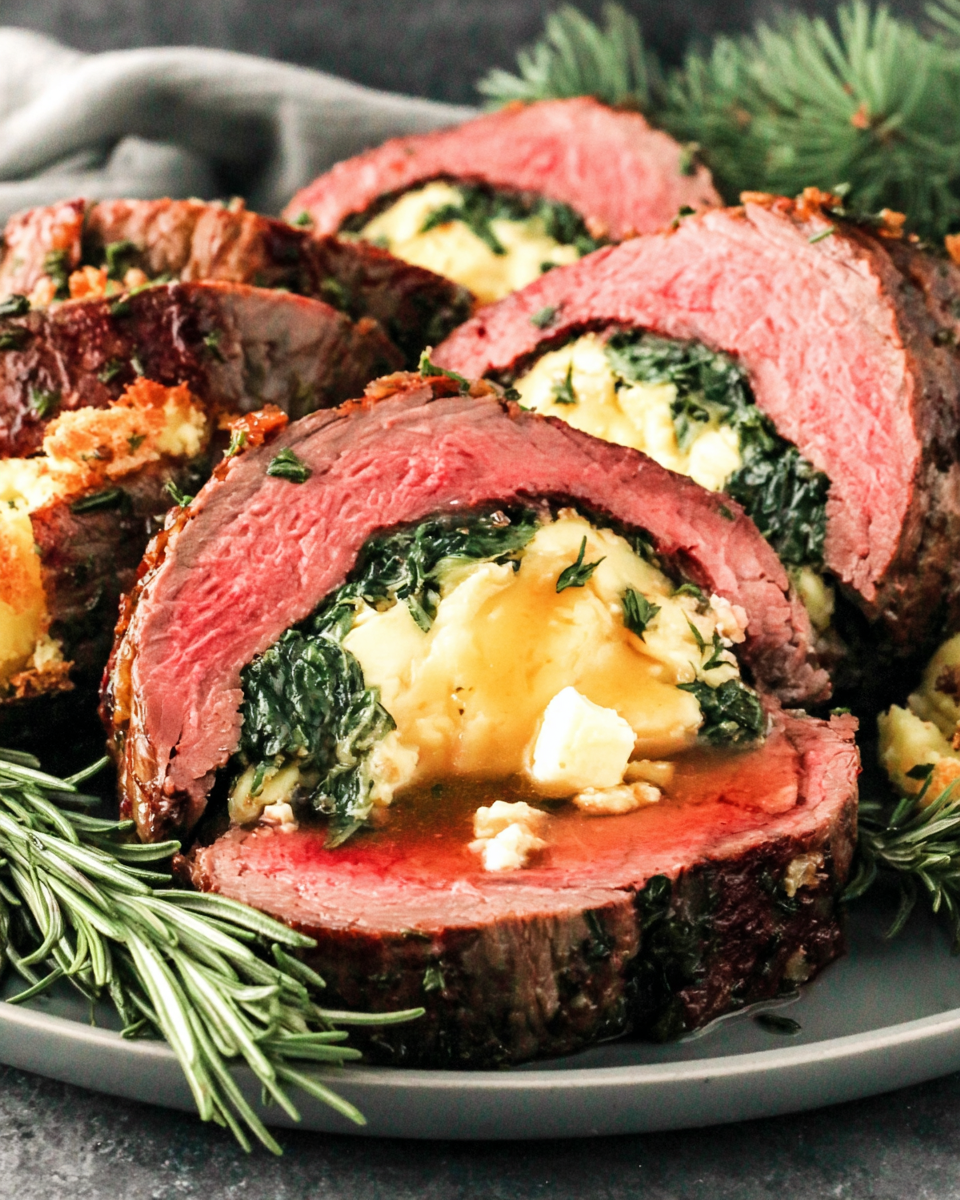
Presentation matters, and slicing the beef reveals the stuffing, making for an impressive display. Serve with your choice of sides to complement the dish beautifully.

Mushroom and Cheese: A Flavorful Union
The savory duo of mushrooms and cheese in the stuffing not only elevates the taste but also provides a comforting, hearty texture. As mushrooms sauté, they release moisture and flavor, blending perfectly with the grated Parmesan that brings a rich umami punch. This delightful combination makes each bite of the tenderloin a gourmet experience.
Herbs That Shine During the Holidays
Herbs like parsley and thyme bring vibrancy and freshness essential for festive meals. Their aromatic profiles uplift the richness of the beef, balancing the indulgence with bright elements that capture the essence of the holiday season. Incorporating fresh herbs creates a sense of warmth and hospitality, enhancing the overall dining experience.
The Art of Layering Flavors
Layering flavors carefully is critical in this dish. From the sautéed vegetables to the spices and cheeses, each component contributes to a harmonious flavor profile. This technique not only enhances the beef but also showcases the depth of the stuffing, ensuring that every forkful is a delight filled with celebration and comfort.
FAQs
What can I do if my stuffing is too dry?
If your stuffing feels too dry, adding a splash of broth or a bit more olive oil before stuffing the tenderloin can help. This will enhance moisture and flavor.
Can I use different types of cheese in the stuffing?
Absolutely! Feel free to experiment with different cheese varieties like feta or gouda. Each cheese will bring its unique flavor and texture to the stuffing.
What if my beef tenderloin is overcooked?
If your tenderloin overcooks, it may become tough. To salvage, slice it thinly and serve with sauce or gravy to enhance moisture.
How do I prevent the stuffing from falling out during cooking?
Ensure the stuffing is packed tightly inside the tenderloin and secure it well with twine or toothpicks, preventing it from escaping while cooking.
Can I adjust the seasoning levels in the stuffing?
Yes, adjusting the salt, pepper, or herbs according to your taste preferences is encouraged to create a stuffing that suits your palate.
How can I add more vegetables to the stuffing?
You can incorporate finely chopped spinach or roasted bell peppers for added flavor and nutrition. Just ensure they are adequately sautéed to remove excess moisture.
Conclusion
Creating a quick Christmas stuffed beef tenderloin is an excellent way to impress your guests without spending all day in the kitchen. With the right ingredients and techniques, you can elevate your holiday dining experience effortlessly.
This dish not only showcases the beauty of the festive flavors but also brings warmth and togetherness to the dinner table. Dive into the soothing richness of this meal and share joyful moments with your loved ones.
Recipe Card

Simple and Flavorful Meatloaf Cups for Dinner
Ingredients
Method
- Preheat the oven to 375°F (190°C).
- In a large bowl, combine all the ingredients.
- Grease a muffin tin lightly with non-stick spray or oil.
- Scoop the meat mixture into each muffin cup, filling them about 3/4 full.
- Top each cup with a teaspoon of ketchup.
- Bake in the preheated oven for 20-25 minutes.
- Let the cups cool slightly before removing them from the tin.
Notes
Additional serving suggestions: pair with a crisp salad, garlic bread, or roasted seasonal vegetables for balance.
For make-ahead, prep components separately and assemble just before heating to preserve texture.
Taste and adjust with acid (lemon/vinegar) and salt right at the end to wake up flavors.